

ENTER OUR VIDEOS
RECEIVE OUR WORK
Enter the full collection of our
tributes to Saints on YouTube.
Be notified quietly by email of our prayers,
reflections and new videos, free of charge.
Saint Norbert of Xanten
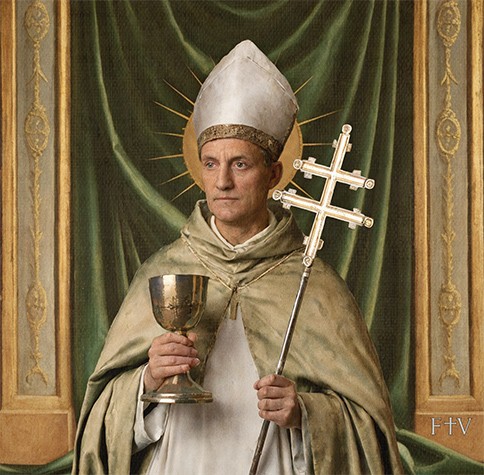
Born: c. 1080, Xanten, Rhineland (in what is now Germany)
Died: 6 June 1134, Magdeburg
Traditional Feast Day: 6 June—Honoured for founding the Premonstratensian Order and defending the Eucharist.
Modern Roman Calendar Feast Day: 6 June
Canonized: 1582 by Pope Gregory XIII (formal confirmation of cultus by the bull Immensae Divinae Sapientiae altitudo, 28 July 1582); cultus extended to the universal Church by Pope Clement X in 1672.
Honoured for: Founding the Premonstratensian Order, reform of clerical life, defense of the Blessed Sacrament, pastoral leadership as Archbishop of Magdeburg, and witness to apostolic poverty.
Patron Of: Premonstratensian Order, defense of the Blessed Sacrament, Bohemia (proclaimed 1627), peace and reconciliation, expectant mothers and safe childbirth (later devotional tradition, formalized 17th–18th centuries).
Symbols in Art: Crozier (episcopal office), white Premonstratensian habit, chalice with spider (miracle tradition), monstrance (later Baroque symbol of Eucharist defense).
Invoked For: Defense of the Blessed Sacrament against sacrilege and heresy, reform of clergy, unity in the Church, strength in leadership and opposition, peace and reconciliation of enemies, protection of widows and orphans, safe childbirth and blessing of children.
Saint Norbert of Xanten–Patronage & Symbols
Norbertus, Norbert von Xanten, Norbert z Xanten
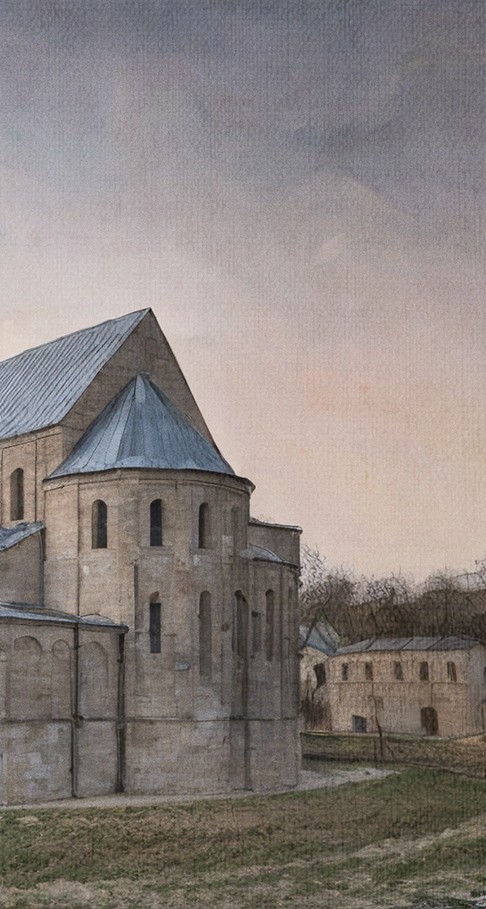
Was Saint Norbert Born in Xanten or Gennep?
Modern sources occasionally give Gennep as Norbert's birthplace. The claim is not supported by the earliest evidence. Both Vita A and Vita B — the two earliest biographies — associate Norbert himself with Xanten and his father Heribert with the castle of Gennep, keeping the two data points distinct. The Bollandists, reading the same tradition, preserved a Xanten natal-house memory and explicitly explained the Gennep connection as a paternal territorial designation. Older Catholic reference works, including Butler and the Catholic Encyclopedia, follow the same distinction.
Traditionally, Saint Norbert was born at Xanten in the Rhineland. His noble family was connected with Gennep, a detail that later sources sometimes conflated with his actual birthplace.
Norbert of Xanten founded the Premonstratensian Order and later became Archbishop of Magdeburg. He is remembered as a reformer whose life moved from courtly privilege to apostolic poverty, then into the difficult leadership of a major German see. His biography is preserved not only in later summaries but in early vitae that reflect the immediate veneration and miracle tradition attached to his tomb and to the communities he formed.
Remembering Saint Norbert
Early Life at Xanten and the Court World
Norbert was born at Xanten in the Rhineland around 1080, into a noble family connected to the region of Gennep. He received ecclesiastical formation early and became a canon of the collegiate church at Xanten. He was ordained subdeacon and lived within the clerical estate while remaining closely tied to the world of princes and courts. He appears in sources as attached to the archiepiscopal and imperial environment, serving at the court of the Archbishop of Cologne and later at the court of Emperor Henry V, where he held the office of imperial almoner.
Later hagiographic summaries describe a man shaped by ambition and comfort, with access to prestige but without the interior conversion that later marked him. He was offered the bishopric of Cambrai, but refused it.
Caught in a sudden lightning storm, Norbert of Xanten is thrown from his horse
—the moment that broke his pride and began his conversion.

Conversion and Ordination
His conversion is tied to a sudden confrontation with death. While riding, he was struck by lightning in a storm and fell unconscious "like one dead." This event became the pivot in the tradition. He returned to the Church's sacramental life, embraced austerity, and submitted himself to discipline. The Vitae tradition frames this turning not only as fear but as moral reversal, preserving the formula: "Turn from evil and do good; seek peace and pursue it." He sought ordination to the priesthood and received Holy Orders from the Bishop of Cologne, having been prepared under the guidance of Abbot Cono of Siegburg. He also established a Benedictine community on his estate at Fürstenberg and gave it to the Benedictines.
After his ordination, Norbert withdrew for forty days to the Abbey of Siegburg for a sustained retreat under Abbot Cono, then returned to Xanten and celebrated his first Mass in the collegiate church. The early sources preserve a hostile detail from this moment: a young cleric, scandalized by Norbert’s sudden change of life, spat in his face—an episode treated in the tradition as an early sign of the resistance that would follow his reforming work.
He then resigned his benefices and preferred appointments, distributed what he could to the poor, and began to live as a wandering penitent and preacher. Norbert travelled to Saint-Gilles and sought an audience with Pope Gelasius II, who granted him faculties for preaching. After Gelasius’ death, Norbert later wanted to confer with Pope Calixtus II.
Norbert travelled to Saint-Gilles and sought an audience with Pope Gelasius II, who granted him faculties for preaching. After Gelasius’ death, Norbert later wanted to confer with Pope Calixtus II.
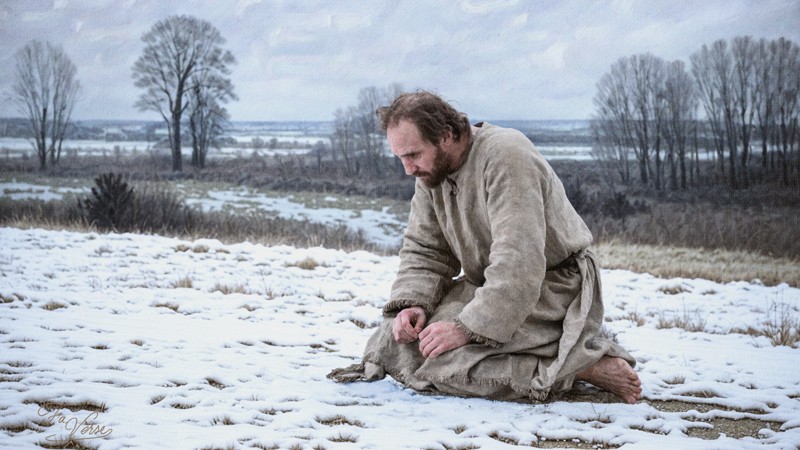
A Barefoot Preacher, and the Cost of Severity (1119)
Norbert's reform efforts provoked resistance. At Valenciennes in March 1119 he encountered Bishop Burchard of Cambrai; Burchard's cleric Hugh attached himself to Norbert as a companion. Later that year, intending to confer with Pope Calixtus II at the Council of Reims (October 1119), Norbert was directed instead toward a stable foundation for the companions gathering around him. He preached reform of clerical life and discipline. He travelled barefoot, often without provisions, relying on alms.
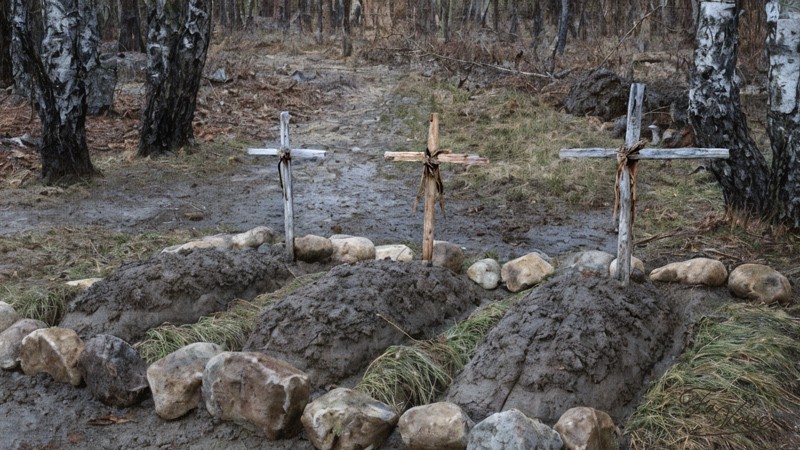
But the tradition also records the cost of his extremity. In 1119 three of his companions died at Valenciennes. The reported occurrence can naturally be interpreted as a warning: zeal without prudence can destroy those drawn into it. This episode is important for understanding his reform: it was not merely rhetorical moralizing, but a lived severity that could wound as well as purify. Norbert's legacy cannot be reduced to slogans; it includes the hard edge of the reform life he chose and imposed on those who followed him.
His preaching was remembered as effective not only in speech but in accompanying acts interpreted as signs: healings, conversions, and moral reform were tied to his itinerant activity, and his hagiographical portrait emphasizes that he taught in word and deed.
Prémontré and the Foundation of the Premonstratensians
In 1121, at Prémontré in northern France, Norbert founded the Premonstratensian Order (also called Norbertines or White Canons). On Christmas Day 1121, he and approximately forty followers made their first profession of vows under the Rule of Saint Augustine.
This was not a monastery for withdrawal from the world, but an active reform: canons regular combining prayer and discipline with pastoral work.
The early sources preserve several concrete details: Norbert chose a lonely, marshy valley in the forest of Coucy, described as being in the form of a cross; the first community began in near-poverty, living in rough huts before a permanent house was established. His earliest companions are repeatedly named in the sources—Hugh of Fosses, Evermode, and Antony—figures treated as foundational for the first generation of the order.
The foundation expanded rapidly. Houses spread through northern France, the Low Countries, and Germany, as bishops and nobles sought communities of disciplined clergy capable of both reform and pastoral service. The early order combined strict common life with active ministry, and this became its distinctive identity as the first generation formed under Norbert's discipline.
Norbert's foundation also developed a female branch: communities of canonesses emerged, tied to the same Augustinian framework but living in forms adapted to women's houses. These female communities were not merely later accessories but part of the early Premonstratensian world, though later tradition also distinguishes carefully between vowed religious life and secular duty.
Blessed Ricwera (d. 1126) is named in the Norbertine sources as the first spiritual daughter among the early canonesses, confirming that the female branch emerged very early alongside the men’s communities. In Germany, at Kappenberg in Westphalia, a former castle was given over to become a Premonstratensian house—an example of how the order drew aristocratic patrons as well as penitents into its reforming orbit.
The same source preserves the figure of Theobald, Count of Champagne, as the seed of a lay-associated branch: Theobald and his followers were invested with the white scapular, and in 1122 a Third Order for the laity is described as being instituted under Norbert's influence.
Antwerp and Eucharistic Conflict
In Antwerp, Norbert confronted the surviving movement of Tanchelm, whose preaching had attacked belief in the Eucharist. He was remembered there as “the Apostle of Antwerp,” and the monstrance became one of his chief iconographic attributes. In the medieval worldview, Eucharistic contempt was treated not as abstract error but as a fundamental breach of sacred order.
A striking miracle tradition in the Vitae further reinforced this Eucharistic association: the story that a spider fell into the chalice during Mass, and Norbert consumed it without harm, is preserved as a sign of trust and sacramental reverence, and it became part of later popular devotion.
Early foundations established within roughly the first five years of the order’s growth include: Floreffe, Viviers, St.-Josse-au-Bois, Ardenne, Cuissy, Laon, Liège, Antwerp, Varlar, and Kappenberg.
In 1125 Norbert travelled to Rome to seek confirmation from Pope Honorius II; the Bull of Confirmation is dated 27 February 1126, formally approving the institute and its observance under the Rule of St. Augustine.
The Vitae also record a miracle at Würzburg in which Norbert restored sight to a blind woman, and that he narrowly escaped being elected bishop there—leaving the city secretly to avoid the burden.
Archbishop of Magdeburg (1126–1134)
In 1126 Norbert was elected Archbishop of Magdeburg, a post that brought him into one of the most difficult reform contexts in Germany. His reforms provoked violent opposition. He faced armed resistance, persistent hostility from clergy and nobles, and three attempts on his life.
As archbishop he sought to restore discipline, recover alienated church property, and enforce moral and canonical norms. His work required constant political navigation. Magdeburg sat at the intersection of German episcopal authority, imperial politics, and the broader reform movement.
The Papal Schism and Imperial Politics (1130–1133)
The disputed papal election of 1130 drew Norbert into Church politics at the European level. He supported Innocent II against Anacletus II, took part in councils, and worked to consolidate German support for Innocent—emerging as a key figure in securing the German episcopate’s alignment with the legitimate pope and strengthening the papal cause within the Empire.
Norbert accompanied Emperor Lothair to Rome, assisting him as chancellor and adviser and helping stabilize the papal position in Germany and Italy. This confirmed his legacy not merely as an ascetic founder but as a reforming bishop engaged in the highest Church conflicts of his time.
Death (1134) and Immediate Cult
Norbert died on 6 June 1134 at Magdeburg. He was buried in the Church of St. Mary, and a cult quickly formed around his tomb. Miracles were recorded in the Vitae and in later tradition. The early hagiographical portrait presents his death as the completion of a reform life that moved from private asceticism to public burden.
The question of canonization is complex in later summaries. The Bollandists deny that he was canonized by Innocent III, and the tradition indicates that formal universal recognition came only later.
His canonization was confirmed by Pope Gregory XIII in 1582, by the bull Immensae Divinae Sapientiae altitudo (28 July 1582), which authorised a feast with octave in honour of St. Norbert. In 1672 Pope Clement X extended the feast to the universal Church.
Early Cult and Medieval Veneration Before Canonization
Even before formal canonization, Norbert was venerated as a saint within the communities formed under his influence and within the Premonstratensian liturgical world. The very existence of early Vitae—Vita A and Vita B—reflects not merely biography but cult: the Vitae are shaped by miracle memory, moral exemplarity, and the need to preserve Norbert's sanctity as a living inheritance within the order.
Liturgical evidence confirms this. Pre-1582 Premonstratensian veneration treated him as a saint within the order's liturgical practice, showing that his sanctity was lived and prayed long before later papal acts. This is consistent with medieval patterns of local and order-based veneration that later required papal confirmation for universal recognition.

The Vltava River valley—Bohemia.
Along routes like these, Norbert’s memory and cult spread swiftly among
early Premonstratensian communities, decades before formal canonization.
Norbert's Devotion in Bohemia and Later Developments
The formal confirmation of Norbert’s cultus in 1582 came during the post-Reformation Catholic revival and the order’s renewed cohesion. A decisive moment for his Bohemian veneration came in 1627, during the confessional conflicts of the Thirty Years’ War era, when his relics were translated from Magdeburg to the Abbey of Strahov in Prague. The translation became a public event tied to mass abjurations and reconversions, and Norbert was proclaimed a patron and protector of Bohemia.
The printed culture of the early modern period expanded Norbert's devotion: liturgical offices developed within Premonstratensian networks. This later development also produced new layers of patronage claims and miracle traditions.
Legacy
Norbert's legacy cannot be reduced to one role. He was remembered as a radical penitent preacher, a founder of disciplined clerical life, a Eucharistic defender, and a reforming archbishop drawn into the highest Church conflicts of his time. His order survived institutional change and reform cycles, yet retained the core Augustinian identity of common life, liturgical centrality, and pastoral service.
At the same time, the tradition preserves the costs of his extremity: disciples lost, enemies made, and a reform movement that required constant negotiation between zeal and sustainability. Norbert's cult and legacy therefore remain bound to a realism that is neither skeptical nor sentimental: a life of sanctity expressed not as legend alone but as a disciplined pattern of reform, sacrifice, and enduring institutional fruit.
Primary Historical Sources
Vita A (Life of St. Norbert A). 12th-century hagiographical text preserving early miracle tradition and conversion narrative.
Bull Immensae Divinae Sapientiae altitudo (28 July 1582). Pope Gregory XIII, confirming the cultus of St. Norbert.
Premonstratensian liturgical books (pre-1582). Evidence of early veneration in liturgical practice.
Secondary / Reference Sources
Butler, Alban. Lives of the Saints, Vol. VI. 1780.
Catholic Encyclopedia. "St. Norbert." New Advent.
Catholic Encyclopedia. "Premonstratensian Canons." New Advent.
Encyclopedia.com. "Norbert of Xanten, St."
Encyclopaedia Britannica. "Saint Norbert of Xanten."
Kirkfleet, Cornelius J., Ord. Praem. History of Saint Norbert. 1916.
Norbertines UK. "The Translation of St Norbert."
Sojka, V. "Oficium ke svatému Norbertovi a jeho vývoj." Charles University doctoral thesis, 2013.
A Life of Our Holy Father Norbert. Norbertine compilation.
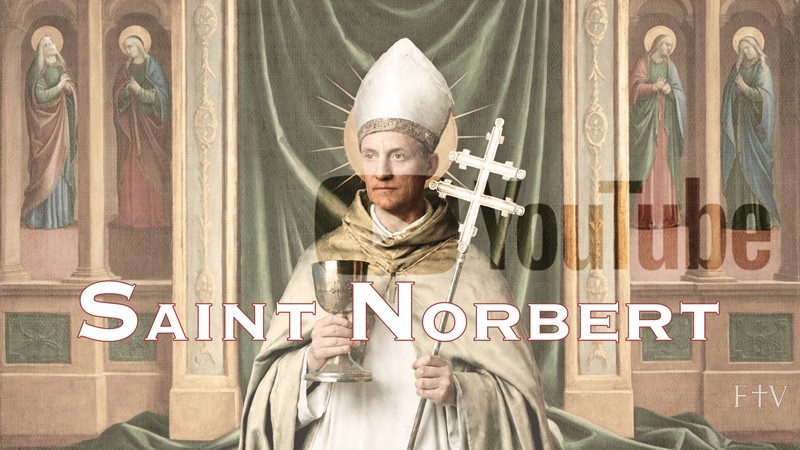
Honour Saint Norbert with us in prayer and scripture. This video tribute invites you to meditate on his witness,
unite your petitions with his intercession, and remember his reforming zeal and steadfast devotion to Christ.
