Witnesses in the World—Scenes

Moments from the earthly lives of the saints, rendered in sacred realism.
Traditional Catholic saint story holy cards and biography scenes in sacred realism, presented as printed greeting cards.
They serve as gifts and reminders for for various occasions in life: First Communion, Confirmation, namedays, birthdays, life's milestones, times of difficulty, hardship, or moments of need.
They can be given as catholic teaching aids, devotional reminders, and gifts tied to a saint's feast or patronage—quiet images of courage, mercy, teaching, and faithfulness in the ordinary circumstances of life.
Click any thumbnail below to view the item in our Zazzle webshop, or view the full Witnesses in the World collection on Zazzle.
View our other collections here.
Photograph of a printed Witnesses in the World—Scenes holy card, produced on double-thick matte stock.
A physical example from the Faith and Verse narrative saint scenes collection.
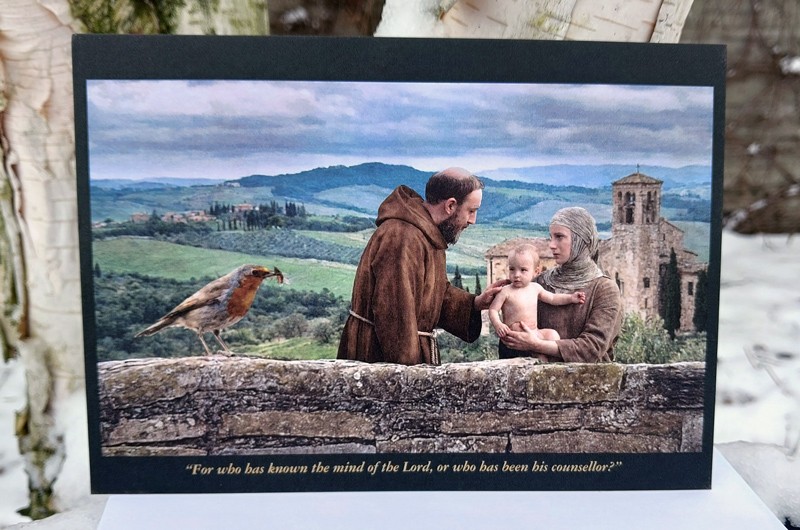
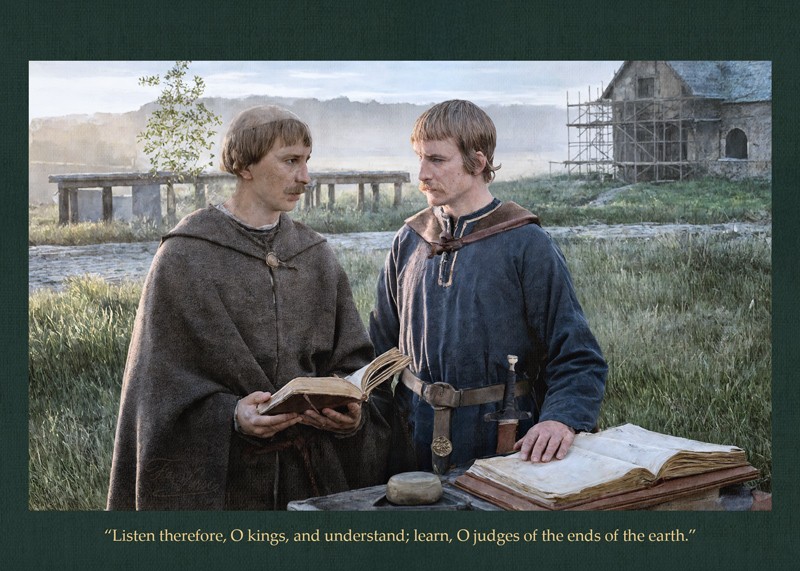


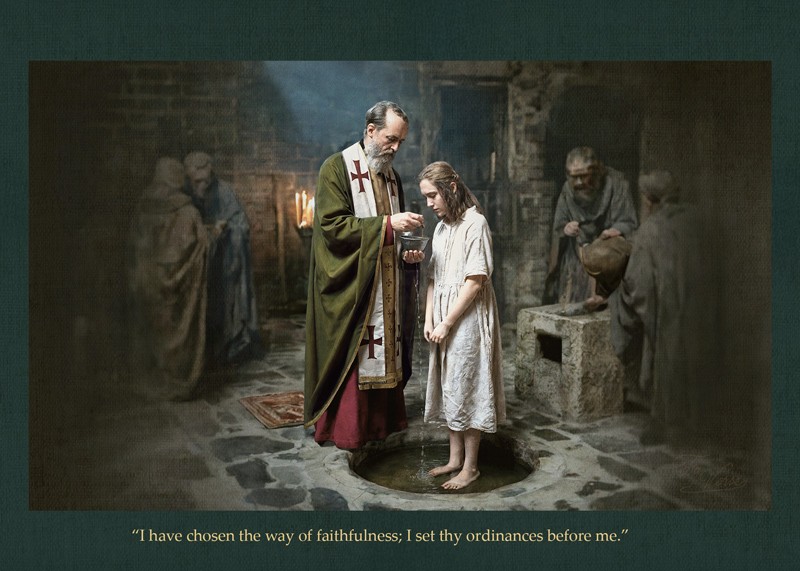
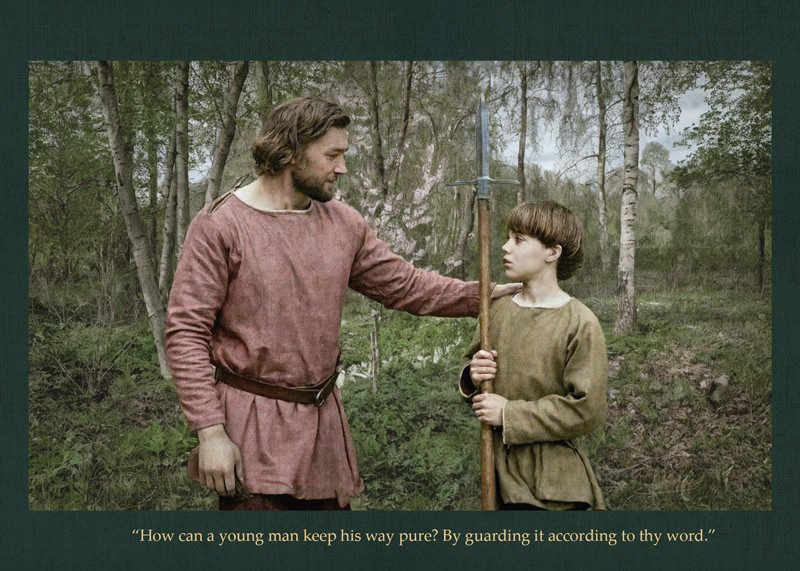
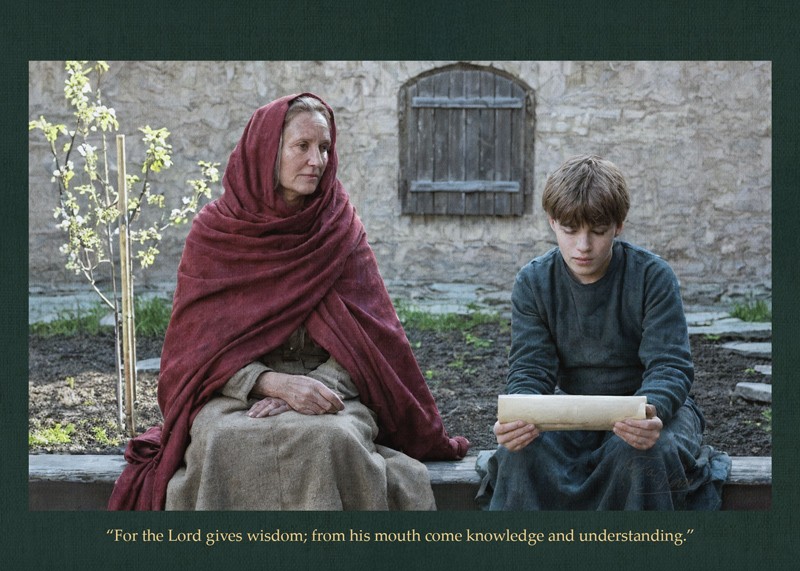

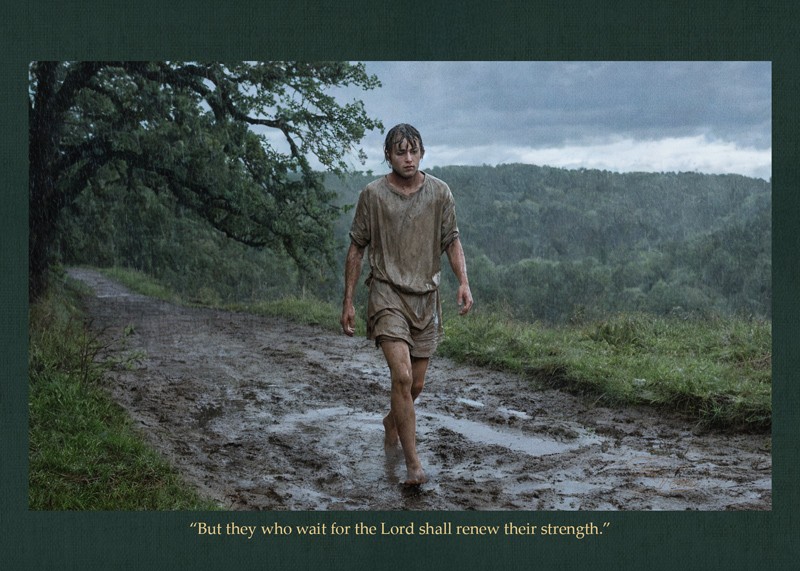
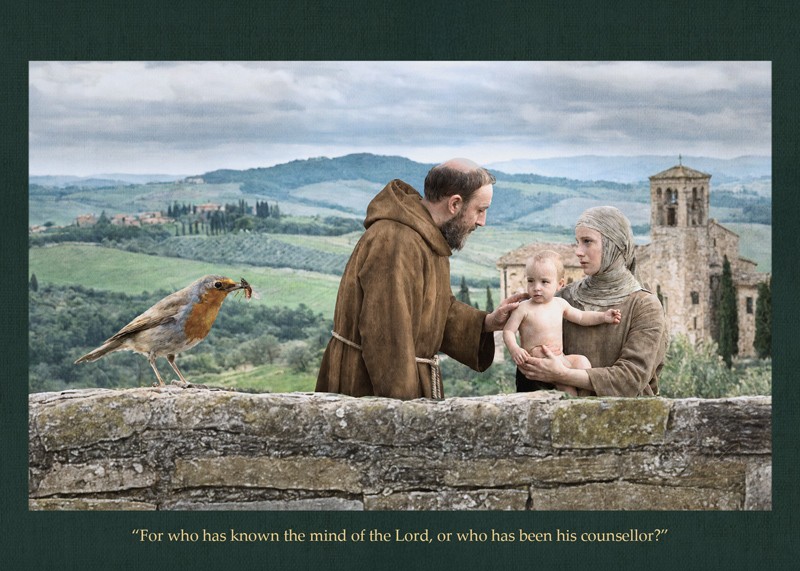
New hagiographic scenes will be added slowly, as the work unfolds.
What These Cards Are
A greeting card is a simple object. Our Catholic saint narrative cards are meant to be given, displayed, and kept. They serve as teaching aids for children, reminders of a saint's witness, gifts for feast days or moments tied to a saint's patronage. These cards do not dramatize or demand; they recollect. They show the saints in moments of their earthly witness—teaching, praying, healing, offering aid, choosing fidelity. Each image carries its scriptural verse within the composition, visible and integrated, meant to be read alongside the scene itself.
Printing and Format
Faith and Verse saint narrative cards are printed greeting cards, designed by Faith and Verse and printed, handled, and fulfilled through Zazzle. The artwork, composition, and presentation are entirely ours; Zazzle is used solely for manufacturing and delivery. Each card measures 5×7 inches, a standard card format intended to be held, given, displayed, or kept. The cards come with envelopes and have no address lines—they are not designed for bare mailing, but for gifting, teaching, or devotional display. The cards are printed on signature double-thick, matte stock, deliberately chosen to avoid thin, flexible paper. These are, and feel like, objects rather than disposable prints, with weight and stiffness suited to repeated handling. Each card carries a hagiographic scene with an integrated scriptural verse at the base. The reverse remains blank or functional for writing.
Imagery and Composition
The Faith and Verse hagiographic scenes portray moments from the earthly lives of the saints—acts of courage, mercy, teaching, conversion, healing, or suffering. These scenes do not dramatize; they recollect. They show the saints within their lived witness—walking the road, teaching a child, praying before dawn, offering aid, choosing fidelity in hidden places. Each composition is shaped to reveal the saint's character through gesture, stillness, and the weight of their surroundings.
The imagery is grounded in the historical world the saint inhabited. Clothing, tools, homes, liturgy, and landscape are rendered according to the best surviving medieval and early-Christian evidence, without fantasy or modern embellishment. Settings are not idealized. Interiors are lit by candle or hearth; exteriors show the labor, weather, and material constraint of their time and place. The aim is not spectacle, but proximity—to encounter the saints within the conditions of their earthly witness.
Scripture is integrated into each composition, placed at the base of the image rather than on the reverse. This allows the verse to be seen alongside the scene, offering context and resonance without separation. The verse does not explain the image; it accompanies it, as word and image have always accompanied one another in the life of the Church.
Saints as Persons in Time
The saints depicted here are not abstractions or symbols. They are named persons within history, shown at moments of decision, service, or endurance. These images do not reduce the saints to singular dramatic episodes or sentimental tableaux. Instead, they show human presence within the material world—figures capable of fatigue, uncertainty, and steadfastness.
Gesture and posture carry meaning. A hand placed on a child's head, a body bent in labor, a face turned toward another in counsel or comfort—these are the moments that reveal character. Meaning is not forced. Silence is allowed. The work assumes faith rather than arguing for it, and offers images meant to be lived alongside rather than consumed.
Historical Attention and Interior Witness
Faith and Verse approaches these scenes as imagined moments—shaped by historical evidence but not bound to theatrical reconstruction. Clothing, tools, and settings follow what is known from surviving sources, but the aim is not documentary accuracy. The aim is proximity: to imagine how such a moment might have appeared, and to enter, however partially, the interior world of the saint at that time.
These images seek the feeling of the moment—the weight of decision, the quiet of service, the presence of grace within ordinary or extraordinary circumstances. They are offered as reflections, not as fixed depictions, shaped carefully and left to stand.