
ENTER OUR VIDEOS
RECEIVE OUR WORK
Enter the full collection of our
tributes to Saints on YouTube.
Be notified quietly by email of our prayers,
reflections and new videos, free of charge.
Saint Aldegundis of Maubeuge
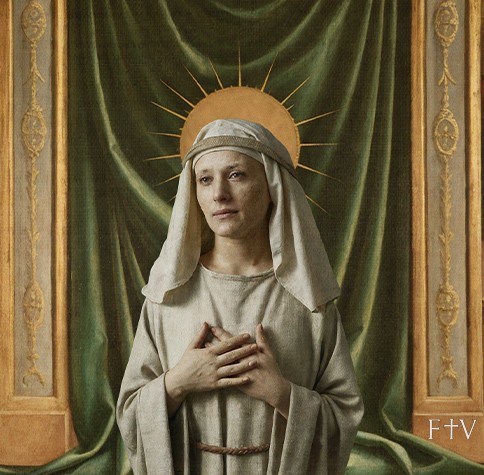
Saint Aldegundis of Maubeuge–Patronage & Symbols
Born: Hainaut (in what is now Belgium/northern France) (c. 639)
Died: Maubeuge Abbey (in what is now France), 30 January 684
Traditional Feast Day: 30 January—Honoured for founding Maubeuge Abbey, her peaceful endurance of illness, and her witness as virgin and abbess.
Modern Roman Calendar Feast Day: Remains in Roman Martyrology; celebrated in local calendars of Belgium and northern France
Canonized: Pre-Congregation—cult attested immediately after death; veneration established by seventh-century tradition and regional devotion
Patron Of: Those suffering from breast cancer and serious illness, farming communities
Symbols: Abbess's crosier (staff), monastic veil, dove descending with veil, crown trampled underfoot
Invoked For: Healing from cancer and serious illness, protection of farms and livestock, deliverance from spiritual enemies and temptation, endurance in suffering without despair, grace to remain faithful in trials
Aldegundis, Aldegonde, Aldegund, Adelgundis, Aldegunais, Aldegondes
Most modern sources place Aldegundis's birth around 639 and her death on 30 January 684, at approximately forty-five years of age. This dating is based on charter evidence, cross-referencing with documented activities of Saint Amandus (who consecrated her), and monastery foundation records.
Alban Butler's Lives of the Saints (1756) gives a significantly earlier death date of 30 January 660, citing Bollandus. This would make Aldegundis only about twenty years old at death—inconsistent with her documented twenty-three-year tenure as abbess and the established chronology of Maubeuge Abbey's foundation (c. 661).
The discrepancy stems from Butler relying on earlier Bollandist scholarship that was later revised. Modern hagiography consistently supports the 684 date, which aligns with the broader historical record of seventh-century Merovingian monasticism and the lifespans of her sister Waltrude and her nieces Aldetrude and Madelberte, all of whom became abbesses in the same monastic network.
In short: born c. 639, died 684. Butler's 660 date reflects outdated scholarship from before modern archival research clarified the timeline.
What year was Saint Aldegundis born and when did she die?
Modern sources present conflicting claims about Saint Aldegundis's birthplace:
English Wikipedia (as of January 19, 2026): Claims "Guînes" (Pas-de-Calais, France) - entirely unsourced
French sources: Claim "Cousolre" (Nord, France) - citing 15th-century chronicles
Primary sources: Say only "Hainaut" (pago Hanoniensi) - no specific town
What the Evidence Shows:
Primary sources (10th century): Hucbald's Vita Sanctae Aldegundis states: "Nata est... in pago Hanoniensi" (Born in the district of Hainaut). No town specified. The Acta Sanctorum compilation confirms this, placing her birth in "the province of Hainaut" without further detail.
Later medieval sources (14th-15th century): Chronicles like Jacques de Guyse's Chroniques de Hainaut (1444) mention Cousolre as a possible birthplace or burial site. These are regional traditions written 700+ years after her death, blending history with local veneration.
Modern error: The "Guînes" claim appears nowhere in historical sources until Wikipedia (post-2000s). It likely stems from confusion with Lambert of Ardres's 12th-century legendary "Count Walbert of Guînes"—a different, unrelated figure.
The Historical Reality: In the 7th century, "Hainaut" (pago Hanoniensi) was a Frankish administrative district centered around modern Mons (Belgium), extending south to include areas like Maubeuge and Cousolre (now in France). Medieval borders did not match modern nation-states—the region was unified Frankish territory.
In short: Saint Aldegundis was born in the region of Hainaut (historical region spanning modern Belgium and northern France), c. 639. Primary sources do not specify a town. Later traditions associate her with Cousolre (9km from Maubeuge), but this is not documented in early sources.and temptation, endurance in suffering without despair, grace to remain faithful in trials
Where Was Saint Aldegundis Actually Born?
Modern sources often call Aldegundis's parents "Saint Walbert" and "Saint Bertilia," but this requires clarification.
The earliest vitae of Aldegundis and Waltrude (7th-8th centuries) mention their parents only as noble and virtuous, with no indication of saintly veneration. The daughters were venerated immediately after death; the parents were not.
From the 14th century onward, a documented local cult developed in Hainaut. A chronicle from the 1390s describes pilgrimage and miracles at Walbert's tomb. In 1349, Bertilia's relics were carried in plague procession. Their relics were formally translated in 1511 and enshrined at Cousolre with a shared feast day (May 11) observed locally. The Bollandists documented this regional tradition in Acta Sanctorum (17th century).
Walbert and Bertilia never appeared in the universal Roman Martyrology. Their cult emerged centuries after their deaths, likely fostered by communities honoring their daughters. This is genuine medieval veneration—but chronologically reversed from "daughters of saints."
Modern confusion: Some sources conflate Bertilia of Cousolre (Walbert's wife) with Saint Bertilia of Mareuil (d. 687, enshrined 1081, feast January 3)—two different people.
Conclusion: Walbert and Bertilia were venerated as saints locally from the late Middle Ages, but this status developed well after their daughters' established cults.
Were the Parents of Aldegundis and Waltrude Venerated as Saints?
Remembering Saint Aldegundis of Maubeuge
Aldegundis belongs to a distinctive group of seventh-century Merovingian holy women whose names are bound together by kinship, geography, and monastic foundation. Modern scholars call them the "Maubeuge Cycle"—a network of noblewomen who established or led religious houses in Hainaut and shaped the early Christianization of Frankish territories. Her sister Waltrude (d. 688), foundress of Mons, was immediately proclaimed holy by popular acclamation and remains the renowned patron saint of that city to this day. Aldegundis herself was venerated immediately after her death. Their parents, Walbert and Bertilia, were later venerated as saints locally in Hainaut. Unlike martyrs whose cults rest on a single dramatic death, Aldegundis represents a quieter but equally structural form of sanctity: the noble abbess who transformed family power into monastic patronage and whose memory became inseparable from the institution she founded.
Aldegundis was born around 639 in the region of Hainaut (modern northern France/southern Belgium). The sources consistently name her parents as Walbert and Bertilla and identify her sister as Waltrude. She refused marriage, received the monastic veil from Saint Amandus, bishop of Maastricht and missionary to the Flemish regions, and became the foundress or first abbess of Maubeuge Abbey on the banks of the Sambre River. She died on 30 January 684, reportedly of breast cancer, at approximately forty-five years of age. Butler's Lives of the Saints, following older Bollandist tradition, gives her death as 660 rather than 684—a chronological discrepancy common in early medieval saints whose Vitae were composed generations after their deaths. Modern scholarship favours 684 based on critical analysis of the manuscript tradition. Her nieces Aldetrude and Madelberte succeeded her as abbesses, establishing Maubeuge as a dynastic monastic house.
These facts form the stable core. Everything else requires careful handling of later hagiographic layers.
What Can Be Said with Confidence
The written tradition preserving Aldegundis consists of several Latin Vitae composed in the centuries after her death. The earliest Life likely dates to the late eighth or early ninth century and may draw on oral traditions from Maubeuge itself. A second Life appeared in the ninth century, and an additional version (termed the Aquitanian Vita) circulated by the later ninth century. These texts were edited and published by the Bollandists in Acta Sanctorum and by Wilhelm Levison in Monumenta Germaniae Historica.
A later biographical redaction, long attributed to Hucbald of St-Amand (died 930), was actually composed around 1050, likely by Thierry of St-Hubert. This eleventh-century Vita became foundational for later medieval retellings and heavily influenced the legend's final form. As Herbert Thurston noted in the Catholic Encyclopedia, "there are several early Lives, but none by contemporaries." This means the tradition must be read critically: we have eighth- and ninth-century memories of a seventh-century woman, shaped by hagiographic convention and monastic interest.
The Vitae also circulated beyond Latin. Aldegundis appears in the ninth-century Old English Martyrology (evidence of Anglo-Saxon monastic networks) and in later Middle Dutch and French vernacular legends.
The Sources: Multiple Lives, No Contemporaries
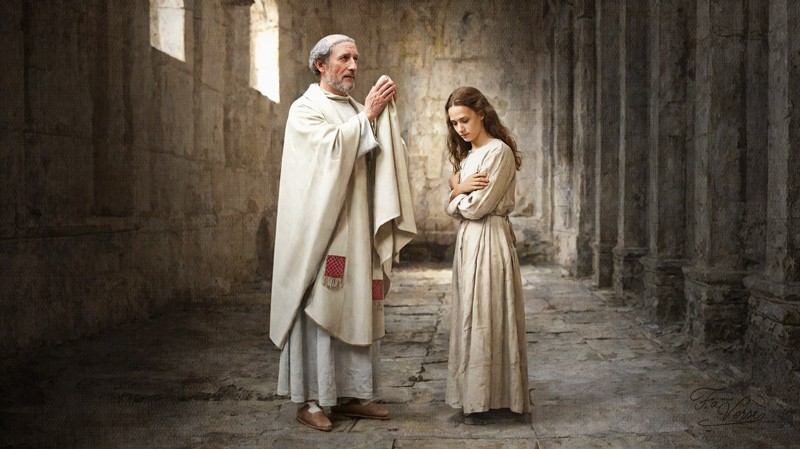
The earliest Vitae emphasize Aldegundis's rejection of marriage. Noble families arranged marriages as political alliances, and a daughter's refusal required both personal conviction and family acquiescence. The sources claim she was urged repeatedly to marry but chose virginity and consecration to God. Later legend amplifies this into a dramatic flight from an "English prince," though this detail appears only in later tradition and may reflect the elaboration common in medieval hagiography.
What is plausible is the account of her receiving the veil from Saint Amandus. Saint Amandus was a historical figure—an itinerant bishop and missionary active in Hainaut and Flanders during Aldegundis's lifetime, closely linked to Columbanian monastic reform and himself venerated as a great apostle of Belgium. His involvement situates Aldegundis within the network of seventh-century Frankish-Irish monasticism: austere, missionary-focused, and backed by noble patronage.
Formation and the Decision for Religious Life
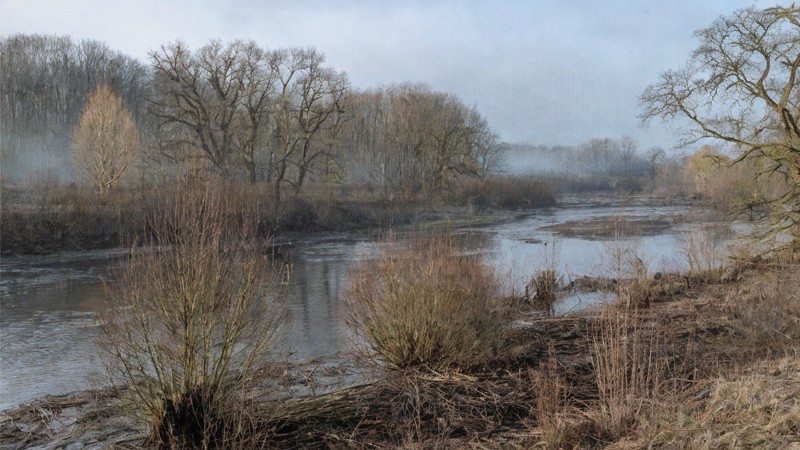
Aldegundis is credited with founding Maubeuge Abbey at a site called Malbode ("bad dwelling" or "desert place") on the Sambre River. The tradition dates this to around 661. Early sources vary on whether she literally founded the monastery or whether she first joined an existing community (possibly at Mons with her sister) before establishing Maubeuge. Modern historians suspect the claim of direct foundation may have been amplified by later Vitae to enhance the abbey's prestige, but her role as first abbess is securely attested.
Maubeuge began as a double monastery—housing both women and men in separate quarters under a single abbess, a structure typical of seventh-century Gaul. The community likely followed a mixed or customary rule influenced by Columbanian and Benedictine traditions. By the ninth and tenth centuries, Maubeuge was recognised as Benedictine, and later still the community became a house of canonesses.
Archaeological excavations at the Maubeuge site (2008-2009) uncovered Merovingian-period burials and structures, including a crypt from the 670s associated with St. Valbert (third abbot of a connected monastery). These findings corroborate continuous occupation from the seventh century and support the historical core of the foundation narrative.
Maubeuge: Foundation and Abbatial Leadership
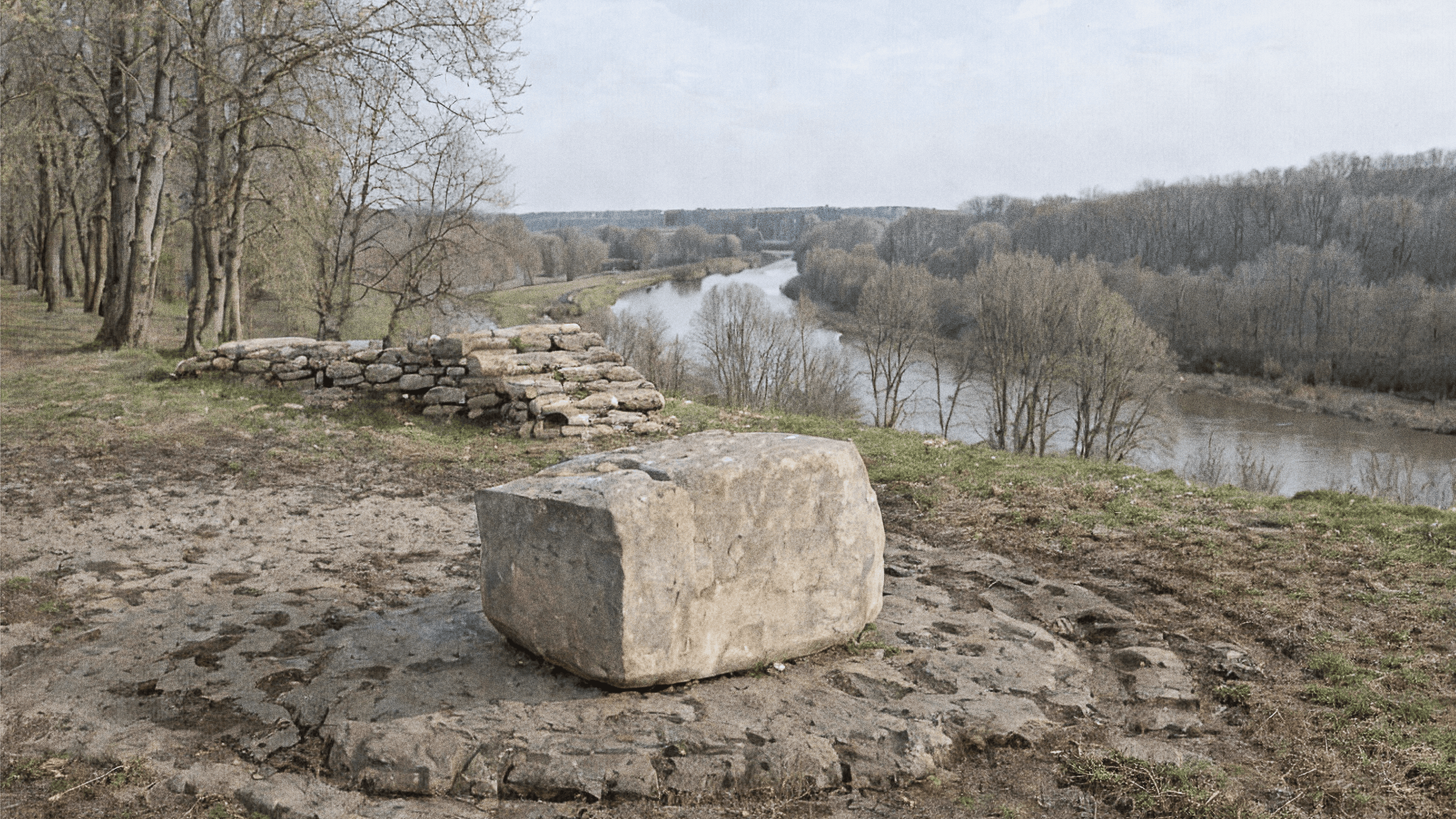
Aldegundis died of breast cancer—a detail preserved consistently across the sources and unusual in hagiographic tradition, which typically emphasizes sanctity over specific medical conditions. Its presence suggests authentic memory. She was buried at Maubeuge, and her tomb quickly became a focus of local veneration.
Her feast day (30 January) appears in ninth-century Carolingian martyrologies, confirming an established cult by that period. The cult remained primarily regional
—centred in Hainaut, Flanders, and extending into the Rhineland—but it was stable and well-documented. Her relics were enshrined at Maubeuge, and portions were later distributed to churches in Mons, Liège, and as far as the Abbey of the Dunes on the Flemish coast.
Medieval church dedications reflect the cult's geographic spread: the Collegiate Church of St. Aldegundis in Emmerich (Germany) existed by the early tenth century, and multiple parishes in modern Belgium and northern France bear her name. Pilgrims visited Maubeuge seeking healing, particularly for illnesses associated with her own death—breast cancer, tumours, and ulcers—as well as for childhood diseases and fevers. This healing reputation became central to her cult identity.
Death and the Early Cult
Aldegundis became known as a patron against breast cancer and other cancers, a role directly connected to her death. Her intercession was also sought for childhood illnesses (whooping cough, convulsions), fevers, wounds, and sudden death. Some communities invoked her for protection of children learning to walk—possibly stemming from stories of her healing miracles involving infants.
Her cult persisted through the medieval period and survived into modernity. Annual novenas are still held in parishes like Alken and Overwinden in Belgium, where relics are venerated. The feast continues to be observed on 30 January in regions where her cult was strong.
Patronage and Continuing Veneration
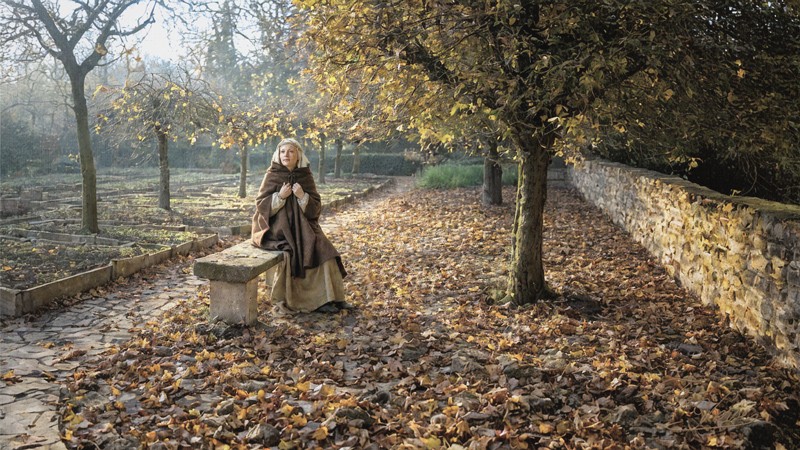
As with any medieval saint, Aldegundis's Vitae accumulated pious motifs over time. The most famous is the miraculous crossing of the Sambre River—sources claim she walked dry-shod across the water when leaving her family home. This appears in ninth-century texts and follows patterns familiar from the lives of other saints (saints miraculously crossing water, similar to episodes in the lives of Cuthbert or Mary of Egypt).
Another late addition is the dove descending with a veil during her consecration by Saint Amandus—a motif absent from the earliest Vita and characteristic of later medieval elaboration (doves appear in the lives of Scholastica and others). Some Baroque depictions show Aldegundis trampling a crown underfoot, symbolizing her rejection of worldly marriage, but this iconographic detail is not documented in early sources.
A particularly inventive later claim is that Aldegundis suffered eye torture and miraculous restoration—this appears to be a martyrdom motif borrowed from virgin-martyrs like Lucy and grafted onto Aldegundis's story in later tradition. This has no basis in any credible source.
The core narrative remains modest: a noble virgin who refused marriage, founded a monastery, lived an austere religious life, and died of natural illness after years of leadership. The miraculous elaborations added by later generations reflect the deep devotion her memory inspired.
What Is Legend Growth Rather than Early Core
The historical record of Saint Aldegundis, though incomplete, reveals a consistent pattern: a Merovingian noblewoman who transformed family power into monastic foundation, who wielded authority as abbess rather than as wife, and whose sanctity was recognised immediately after death and sustained through regional devotion. She exemplifies how Christianity was embedded in Frankish aristocratic life during the seventh century.
Her death from cancer, honestly recorded in early sources, became the foundation for a patronage that has endured for over a millennium. Maubeuge itself—whatever uncertainties surround its precise founding date—became a significant monastic centre, and Aldegundis's memory remained inseparable from it.
This is the stable historical core: a seventh-century abbess from a family of saints, foundress of Maubeuge, venerated early and continuously in Hainaut and beyond, remembered for holy leadership and for bearing suffering with fortitude.
Aldegundis's Historical Weight
Acta Sanctorum, Januarius vol. II (Bollandist edition, multiple Vitae including Vita prima, Vita secunda, and the Aquitanian version).
Wilhelm Levison, ed., Monumenta Germaniae Historica, Scriptores Rerum Merovingicarum VI (early Vita edition).
Primary Sources
Alban Butler, The Lives of the Saints (1756-1759 edition; revised editions throughout 18th-19th centuries).
Herbert Thurston, "St. Aldegundis," The Catholic Encyclopedia (1907).
Aline Hornaday, "Toward a Prosopography of the 'Maubeuge Cycle' Saints," Prosopon Newsletter (1996).
Isabel Moreira, "Aldegund of Maubeuge (ca. 635–684)," Quidditas (1998).
Michel Rouche and Jean Heuclin, eds., Chanoines et chanoinesses des anciens Pays-Bas: Vita Aldegundis (2015).
Archaeological documentation: Maubeuge Abbey excavations (2008-2009), French heritage reports.
Secondary Sources
This biography draws on medieval hagiographic sources (Vitae of the 8th-11th centuries) accessed through modern critical editions and scholarly syntheses. The interpretation distinguishes early tradition from later elaboration and follows current specialist scholarship on Merovingian female monasticism. Where sources conflict or legendary material appears, this is noted explicitly. The goal is historical honesty about what can and cannot be known about a seventh-century woman whose life was recorded by authors writing generations—sometimes centuries—after her death.
Note on Methodology
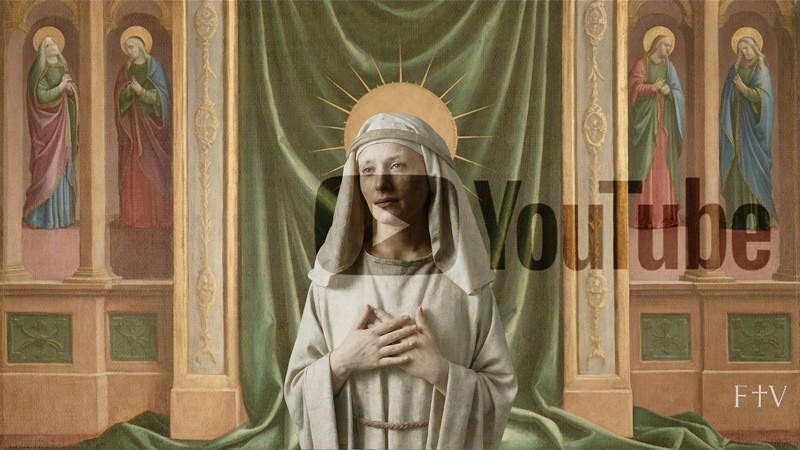
Honour Saint Aldegundis with us in prayer and scripture.
This video tribute invites you to reflect on her steadfast consecration, unite your petitions with her intercession,
and remember her faithful endurance in illness, leadership, and prayer.
