
ENTER OUR VIDEOS
RECEIVE OUR WORK
Enter the full collection of our
tributes to Saints on YouTube.
Be notified quietly by email of our prayers,
reflections and new videos, free of charge.
Saint Godelieve of Gistel
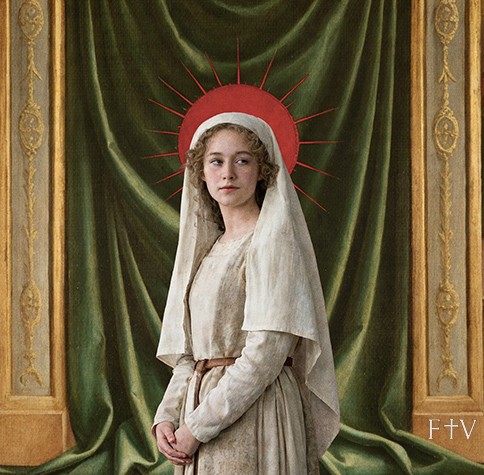
Saint Godelieve of Gistel—Patronage & Symbols
Born: Wierre-Effroy (Londefort), County of Boulogne, in what is now France, c. 1045
Died: Gistel, County of Flanders, in what is now Belgium, traditionally 6 July, year uncertain, conventionally 1070
—murdered by strangulation
Traditional Feast Day: 6 July—honoured for her patient endurance of cruelty, her charity to the poor under deprivation, and her martyrdom; also the current Diocese of Bruges observance
Canonized: Pre-Congregation—recognized through the episcopal elevation of her relics at Gistel by Bishop Radbod II of Tournai-Noyon, 30 July 1084
Patron Of: Harmony and concord between spouses; throat ailments
Symbols in Art: Martyr’s crown; a veil, the instrument of her strangulation; a well; a domestic chamber with a small devotional triptych; in later popular iconography, four crowns representing her four titles of glory—wife, abandoned wife, virgin, and martyr
Invoked For: Peace and faithfulness within marriage, endurance through family cruelty without bitterness, charity that continues despite personal hardship, relief from throat ailments, protection for women suffering within their own households
Godeliph, Godeleva, Godelina, Godeliève, Godelieve van Gistel

Saint Godelieve is traditionally remembered as a virgin martyr. Later devotional imagery also gives her four crowns, representing wife, abandoned wife, virgin, and martyr.
Drogo’s earliest life presents a real marriage marked by abandonment, cruelty, charity, and death. He does not build the account around questions of consummation, nor does he explain the later title in those terms. The tradition firmly places her among virgin martyrs, while the earliest source remains restrained about the private circumstances of the marriage.
Is Saint Godelieve a Virgin Martyr?
A long-standing tradition holds that Bertolf, overcome by remorse, converted, made a pilgrimage to Rome and the Holy Land, and entered Saint-Winoc's Abbey at Bergues as a penitent monk, where he was locally honoured after death as "*Beatus*." This tradition is genuine and old—traceable to a premodern cult legend conventionally placed in the late thirteenth or early fourteenth century, and independently recorded in the Bergues abbey's own memorial. It does not appear in the earliest and most authoritative account of her life, written within a generation of her death by a monk who appears to have drawn on people close to the case. That silence is not a denial. The biographer who wrote nearest to the events explained that he had set out to record only four things—Godelieve's lineage, her life, her persecutions, and her martyrdom
—and considered Bertolf's fate outside that scope.
Was Godelieve's Husband Ever Held to Account?
Some modern compilations list Saint Godelieve as patroness of needleworkers and seamstresses. The claim has no basis in any medieval or early modern source. What is real is a beautiful piece of cult legend—the *Legenda Anonymi*'s miracle of a seamless shirt said to have been sewn by Godelieve—and a textile object later associated with that tradition, documented clearly only from its nineteenth-century custody and return to the Sint-Godelieve-Abdij in Bruges in 1894. The object is real. The patronage built on top of it appears to be a modern inference rather than a documented medieval devotion.
Is Saint Godelieve the Patron of Needleworkers and Seamstresses?
Remembering Saint Godelieve of Gistel
Few medieval saints were recognized with such speed, and on grounds so immediately legible to the community that first preserved their memory, as Godelieve of Gistel. In 1084, with miracles already reported at her grave, the Bishop of Tournai-Noyon elevated her relics and the cult was, in effect, made official. The community at Gistel never let her go: through the destruction of her church in 1488, through the Calvinist iconoclasm of 1577, through further centuries of translation, re-authentication, and procession, down to a diocesan calendar that still names her on 6 July today. Her biography survives in an account written by a man who, by his own telling, drew on people close to the case. What he preserved is the portrait of a noblewoman who married into a hostile household, endured sustained cruelty without retaliation, continued to give to the poor even as her own rations were cut, and was ultimately murdered by household servants her husband summoned for the purpose.

Godelieve was born around 1045 to Heinfried and Odgiva, minor nobility of the Boulonnais, at Londefort near Wierre-Effroy. Her biographer, the monk Drogo of Bergues, gives her own name's meaning correctly—*nomen enim eius teutonice Deo cara sonat*, "her name in the Germanic tongue means dear to God," from the elements *God* and *lief*—and modern philology confirms he was right: the name was genuinely rare before the year 1100, and very likely survived into later centuries only because her cult kept it alive. Drogo also leaves a physical description: black eyebrows, black hair, fair skin.
She was betrothed to Bertolf, of the castellan family of Gistel, in what historians who have studied the marriage closely describe as a clear *mariage de raison*—arranged between Godelieve's parents and Bertolf's father, with Bertolf's own mother apparently left out of the decision entirely. That detail offers one plausible explanation for the open hostility Bertolf's mother showed Godelieve from the very start, including, on the third day of the wedding celebrations, publicly insulting her new daughter-in-law as a foreign "crow" while Bertolf himself stayed away at his father's house.
Left largely alone in the marriage, Godelieve ran the household without complaint and continued sharing her own food with the poor even as her mother-in-law—by Drogo's account, the driving force behind the family's cruelty—cut her rations. A small sign accompanied this charity: bread she had set aside for the poor was found, on inspection, to have turned to wood shavings, then was restored to bread once it reached the hands it was meant for. Eventually she fled to her father's household; an appeal through the Count and the Bishop secured a reconciliation, and she returned to Gistel.
What Can Be Said with Confidence

Neither deprivation nor sustained cruelty broke her, and Bertolf, frustrated by this, turned to murder. He named two household servants, Lambert and Hacca, to carry it out, devised a ruse to draw Godelieve from her chamber—telling her a woman had come who could restore their marriage—and rode away to Bruges so that he might appear free of the crime when it happened. That night, Lambert and Hacca strangled her and held her under water to be certain she would not revive.
Drogo's account ends there, in silence about any punishment that may have followed. That silence reflects the deliberately narrow scope he set for himself—he names his subject as four things only: Godelieve's lineage, life, persecutions, and martyrdom
—not an absence of consequence. The tradition that grew up afterward, of Bertolf's remorse, conversion, and eventual penance at Bergues, belongs to genuine cult memory rather than to this earliest record, and is addressed on its own terms below.
The Murder
The biography that preserves all of this was, for two centuries, attributed to the wrong author. Working from a manuscript he had no way of knowing was a later reworking, the seventeenth-century Bollandist scholar Sollerius concluded the biographer was a monk of Saint-André's Abbey near Bruges—a claim that could not, in fact, be true, since that abbey's connection to Gistel did not exist until decades after the *Vita* was written. The case stood uncorrected for two hundred years, until the Bollandist Albert Poncelet discovered the genuine thirteenth-century manuscript at Saint-Omer in 1906. Maurice Coens's 1926 critical edition, built on that text, established the true author beyond reasonable doubt: Drogo, a monk of Saint-Winoc's Abbey at Bergues, born around 1020 and dead by 1097, a documented member of that community and a hagiographer with a wider body of work to his name—lives or offices for Saints Winnoc, Lewinna, and Oswald alongside Godelieve's own.
Drogo's authorship matters for more than correcting an old error. He presents his work to Bishop Radbod for correction, and appears, by his own account, to have drawn on people close to the case rather than on distant report. Throughout his writings he treats women with notable sympathy and respect—Bertolf's mother is the sole conspicuous exception—and his portrait of Godelieve joins physical beauty to moral dignity rather than treating the one as a danger to the other. Read this way, the *Vita* looks less like a piece of devotional storytelling composed at a remove, and more like testimony gathered in close proximity to Godelieve's own household, prepared, in part, to support the case already being made for her sanctity.
Drogo of Bergues: The Author Behind the Vita

Liturgical tradition has always kept Godelieve's feast on 6 July—the date the Diocese of Bruges still follows today—and the *Acta Sanctorum*'s own office texts distinguish that principal feast clearly from the secondary 30 July elevation observance. In the twentieth century, the great Bollandist editor Maurice Coens proposed something more intricate: noting that Drogo's text never actually states the year of the murder, he suggested it occurred shortly after 17 July 1070, in the political disorder following the death of Count Baudouin VI, and wondered whether 30 July might in fact be the true death-anniversary, deliberately echoed by the later elevation date.
A fellow scholar, J.-M. De Smet, examined the same evidence directly and offered a simpler answer. He pointed out that 6 July is the octave day of Saints Peter and Paul, and that the monks of Clairmarais Abbey, wishing to keep that octave undisturbed, are the likely reason the 30 July date appears at all in their own observance—a liturgical adjustment, not evidence of a later death. On that reading, 6 July stands as Godelieve's actual day of death, exactly as the liturgy has always held, and Coens's more elaborate political theory is not required. De Smet also noted that the year 1070 itself rests entirely on a later legendary source whose other supplied dates have all been shown unreliable—making the year traditional rather than strictly proven, even as the day of her death remains secure.
When Did She Die? The Question Behind the Feast
Like most saints whose memory was carried first by a small, devoted community and only later set down at length, Godelieve's story grew in the telling. A Latin life composed some generations after Drogo's, known as the *Legenda Anonymi*, develops the cult's central healing story at length: a daughter born to Bertolf by a second marriage, blind from birth, recovers her sight after washing her eyes in the water where Godelieve had drowned. This same later tradition is the genuine source of the account, still honoured locally today, that Bertolf was moved to repentance, made pilgrimage to Rome and the Holy Land, and ended his life as a penitent monk at Saint-Winoc—a tradition independently preserved in that abbey's own records, where he was remembered with the local title "*Beatus*." None of this appears in Drogo. All of it belongs to genuine premodern devotion, carried forward by the same community that never stopped venerating Godelieve herself, and it deserves to be told as what it is: the community's living devotional memory of how this story continued to matter, not a footnote to be set aside.
The same later tradition also gives us the well-loved miracle of the seamless shirt and the beloved local story of Godelieve calming and feeding crows at a site still remembered as "Snipgate"—neither found in Drogo, both cherished in Gistel for centuries afterward.
The Legend Her Community Preserved

The cult took root at Gistel almost from the moment of Godelieve's death, and the 1084 elevation of her relics by Bishop Radbod gave it formal and lasting recognition. A Benedictine community, traditionally founded by Bertolf's own daughter in honour of her stepmother, became the cult's institutional home and remains there in spirit to this day. Her relics were translated within Gistel in 1380 and again in 1557. The town and church were destroyed in fighting in 1488, with the relics safely hidden beforehand, and the abbey was destroyed a second time by Calvinist iconoclasts in 1577, scattering the nuns to Bruges. Through all of this, the relics survived, and the reliquary was formally inspected and re-authenticated in 1623 and again in 1719—a documented thread of careful stewardship across the centuries.
Pilgrims are recorded travelling to Gistel for the 30 July elevation-feast procession from at least 1498, and the modern procession—held on the first Sunday after 5 July, with eighteen tableaux and well over a thousand participants—continues a devotional rhythm first established in the Middle Ages. The 2026 Diocese of Bruges liturgical calendar still lists 6 July as Saint Godelieve's memorial. Her cult shows an unusually continuous local veneration.
Veneration and the Relics of Gistel
The textile object associated with the seamless-shirt miracle has its own remarkable story, and it is a story that deserves to be told honestly rather than left to vague tradition. The garment is documented in the keeping of the Legillon family of Bruges in the nineteenth century, with family custody traceable back to Karel Legillon. After years of patient appeal, the historian Lodewijk Van Haecke finally persuaded the family to return it. On 25 October 1894, he personally carried the object to Abbess M. Stanislas Van de Velde at the Sint-Godelieve-Abdij in Bruges, who received it with evident joy and wrote a letter of thanks that survives in the abbey archive to this day. That nineteenth-century return, rather than any securely documented medieval chain of custody, is the firm historical ground beneath the shirt of Saint Godelieve—an object whose modern story of careful, loving custody is, in its own way, as moving as the miracle it commemorates.
The Shirt of Saint Godelieve

Iconography and Devotion in Art
Godelieve's martyrdom left a genuine, if modest, trace in late-medieval devotional art and manuscripts across Flanders and into northern France—rare enough to be precious rather than common. A Latin suffrage beginning *Ave martyr gloriosa, sponsa Christi speciosa* circulated in Flemish and northern French books of hours, and a Dutch suffrage to her survives in a Bruges-connected book of hours now kept in Neuchâtel. These images repeatedly set her martyrdom within a domestic chamber, with household furnishings and a small devotional triptych nearby—an artistic memory that matches Drogo's own account of a murder staged within the household to look like natural death.
A notable processional banner from 1542, made for the Gistel abbey itself and associated with the Bruges workshop of the painter Lancelot Blondeel, depicts the strangling within Godelieve's own chamber, with the well-washing scene visible in the background—a detailed and moving visual witness to the story as the community of Gistel told it. Popular devotion also gave her the beautiful image of four crowns, representing her four titles of glory: wife, abandoned wife, virgin, and martyr.
The textile object associated with the seamless-shirt miracle has its own remarkable story, and it is a story that deserves to be told honestly rather than left to vague tradition. The garment is documented in the keeping of the Legillon family of Bruges in the nineteenth century, with family custody traceable back to Karel Legillon. After years of patient appeal, the historian Lodewijk Van Haecke finally persuaded the family to return it. On 25 October 1894, he personally carried the object to Abbess M. Stanislas Van de Velde at the Sint-Godelieve-Abdij in Bruges, who received it with evident joy and wrote a letter of thanks that survives in the abbey archive to this day. That nineteenth-century return, rather than any securely documented medieval chain of custody, is the firm historical ground beneath the shirt of Saint Godelieve—an object whose modern story of careful, loving custody is, in its own way, as moving as the miracle it commemorates.
Godelieve's Historical Weight
Drogo of Bergues, *Vita Godeliph*, ed. Maurice Coens, "La vie ancienne de Sainte Godelive de Ghistelles par Drogon de Bergues," *Analecta Bollandiana* 44 (1926): 102–137.
*Acta Sanctorum*, Julii Tomus II, Dies VI Julii.
*Legenda Anonymi* (Anonymus Gistellensis), Latin life, conventionally dated to the late 13th or early 14th century, in *Acta Sanctorum* and later editions.
Sollerius, J., Bollandist commentary, *Acta Sanctorum*, 1721.
Primary Sources
De Smet, J.-M. "De Vita Godeliph door Drogo van Sint-Winoksbergen." *Sacris Erudiri* 20 (1971): 257–269.
Huyghebaert, N. N. "Un moine hagiographe: Drogon de Bergues." *Sacris Erudiri* 20 (1971): 191–256.
Warlop, E. "Het sociale kader. De Vlaamse adel in de tweede helft van de elfde eeuw." *Sacris Erudiri* 20 (1971): 175–189.
Janssens de Bisthoven, B. "Het wondere weefsel van de H. Godelieve." *Sacris Erudiri* 20 (1971): 285–298.
Gysseling, M. "De naam Godelieve." *Sacris Erudiri* 20 (1971): 283–284.
Hoste, A. "Kritische bemerkingen bij de Latijnse legende van S. Godelieve door de Anonymus Gistellensis." *Sacris Erudiri* 20 (1971): 299–330.
Keersmaekers, A. "Het leven van de H. Godelieve in handschriften." *Vlaanderen* 200 (1984): 156–160.
Berteloot, A. "De Middelnederlandse legende van Sint-Godelieve." *De Franse Nederlanden / Les Pays-Bas Français* (1988): 80–88.
Kik, Oliver, and Dominique Vanwijnsberghe. "All about Lieve: St. Godelieve Painted and Illuminated." Prepared for *Preserving Fragile Wisdom: Essays in Honour of Lieve Watteeuw*, ed. Wim François, Hendrik Hameeuw, and Maarten Bassens (Leuven, 2025).
Kienzle, Beverly Mayne, and Nancy Nienhuis. "Battered Women and the Construction of Sanctity." *Journal of Feminist Studies in Religion* 17, no. 1 (Spring 2001): 33–61.
Secondary Sources
Note on Methodology
This biography draws on Drogo's eleventh-century *Vita Godeliph*, the Bollandist *Acta Sanctorum* commentary, and the proceedings of the 1970 international colloquium at Gistel marking the ninth centenary of Godelieve's death, alongside modern critical scholarship on her cult, her authorship question, and her surviving iconography. It distinguishes the earliest and most authoritative record from the genuine cult legend that grew up around it in later centuries, and notes plainly where a popular modern claim—such as a patronage of needleworkers—has no basis in the documented tradition. The approach taken throughout is the same one this collection takes with every saint: that the historical person is real, that the devotion of the communities who kept her memory is itself a fact worth honouring, and that telling both clearly serves her better than romance would.

Honour Saint Godelieve of Gistel with us in prayer and scripture.
This video tribute invites you to reflect on her charity under suffering,
her patient endurance, and her remembered place among the faithful of Gistel.
