

ENTER OUR VIDEOS
RECEIVE OUR WORK
Enter the full collection of our
tributes to Saints on YouTube.
Be notified quietly by email of our prayers,
reflections and new videos, free of charge.
Saint Eulogius of Córdoba
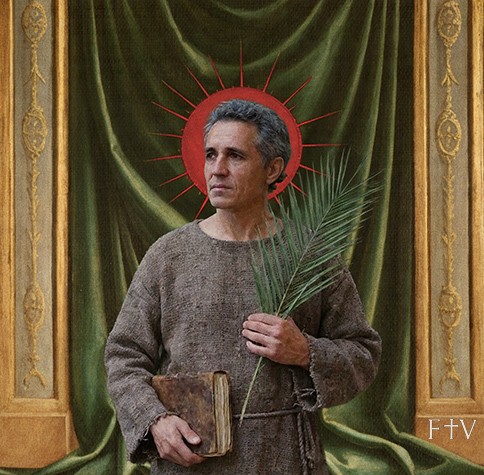
Saint Eulogius of Córdoba–Patronage & Symbols
Born: Córdoba, al-Andalus, c. 800–810
Died: 11 March 859, Córdoba (executed)
Feast Day (Roman Calendar): 11 March
Feast Day (Oviedo/Local): 9 January (Oviedo Cathedral diocesan calendar; paired with Leocritia)
Feast Day (Mozarabic tradition): 1 June — nonnulla kalendaria mozarabica announce both Eulogius and Leocritia on this date. The June date reflects a liturgical adjustment: because 11 March invariably falls in Lent, a secondary observance was anchored to the shrine of St. Zoilus, where his body was translated in June 859.
Canonised: Pre-Congregation; commemorated in the Roman Martyrology; catalogued in the Bibliotheca Hagiographica Latina (BHL) under presbyter Cordubensis, feast 11 March
Patron of: No confirmed medieval patronage. Modern devotional listings assign carpenters and coppersmiths; no medieval attestation has been identified for these attributions
Symbols in Art: Palm branch (martyrdom), priest's vestments, book (his writings); in later representations, episcopal insignia reflecting the early modern archbishop-elect of Toledo framing
Titles: Martyr, Presbyter, Doctor — the title Doctor appears three times in the earliest layer of the Alvaran dossier: in the Praefatio of the Vita, in the translation notice of June 859, and in the verse Epitaphium.
Invoked for: Courage under cultural pressure, defence of Christian identity in hostile conditions, fidelity under interrogation, perseverance in writing and bearing witness
Eulogius Cordubensis, San Eulogio de Córdoba
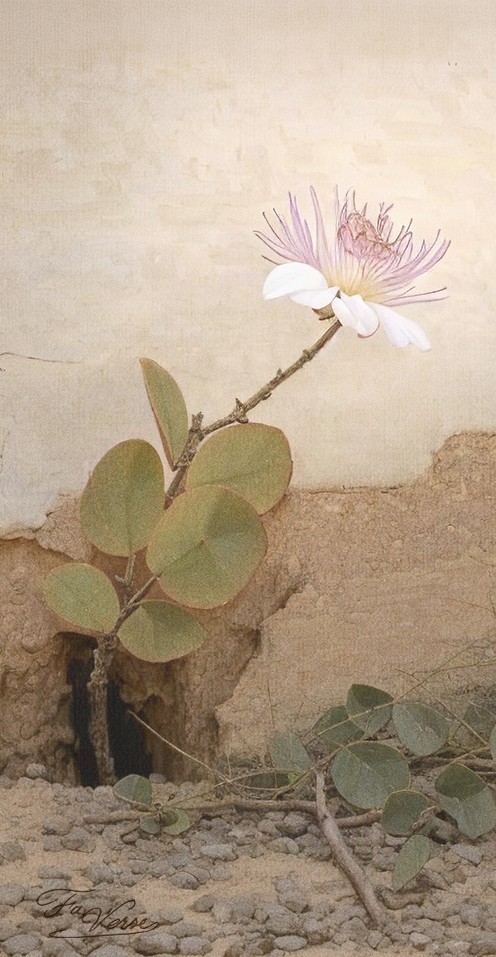
No primary source records his birth year. Paul Alvarus's Vita Eulogii—the earliest biography, written by a man who knew him personally—describes his formation and ordination in life-stage language only. No numeric age is given anywhere in the dossier. Kenneth Baxter Wolf, the primary modern scholar of the Cordoban martyrs, whose translation and study of the Eulogian corpus notes explicitly that Alvarus records neither the date of birth nor detail that would allow its reconstruction.
The common modern estimate of c. 800–810 is a back-calculation from career stage
—he was an established priest by 851—not a datum preserved by the sources.
A widely repeated claim holds that he must have been born before 819, on the grounds that he was a priest by 848 and that Canon 19 of the Fourth Council of Toledo (633) set thirty as the minimum age for ordination to the presbyterate. The canon is real and reflects a genuine normative ideal in the Iberian church tradition. However, the canon's own text is explicitly reformist—it complains that the rule was already being violated in 633. There is no evidence that the thirty-year minimum was invoked or enforced in ninth-century Mozarabic Córdoba, where stable institutional oversight was absent. The canon can function as soft corroboration that a respected presbyter was unlikely to be very young. It cannot generate a precise birth terminus.
Eulogius was born in Córdoba, from a family Alvarus describes as of senatorial lineage. His birth year is unknown. The range c. 800–810 is a reasonable working estimate, not a historical fact.
What Year Was Saint Eulogius of Córdoba Born?
Traditionally—no.
Modern devotional listings assign Saint Eulogius as patron of carpenters and coppersmiths. The claim is absent from Butler's Lives of the Saints (1756–1759) and absent from the Catholic Encyclopedia (1909). The earliest traceable attestations are Spanish-language online santoral databases from the early 2010s, where the paired formula caldereros y carpinteros appears in identical wording across multiple sites
—a pattern consistent with a copying chain rather than transmission from any older document. Some outlets list only carpenters, others list both crafts, which points to selective borrowing rather than transmission from a stable source.
Nothing in the primary dossier connects him to either craft. Alvarus describes his family as of senatorial lineage; his brothers are identified as merchants. No trade miracle, guild connection, confraternity record, or iconographic tradition depicting him with craft attributes has been identified in any source surveyed.
The patronage cannot be verified against any medieval or early modern document.
Is Saint Eulogius of Córdoba the Patron Saint
of Carpenters and Coppersmiths?
Remembering Saint Eulogius of Córdoba
To read the life of Eulogius without first understanding the world he inhabited is to read it as a story about a fanatic. With that world in view, it becomes a story about a community under pressure, a man who chose to document rather than accommodate, and a religious movement that divided Christians as sharply as it alarmed their rulers. The context is not peripheral. It is the biography.
Eulogius of Córdoba is one of the most directly and personally documented figures in this tradition. He wrote his major works during the events they describe. He was imprisoned alongside some of the people whose deaths he recorded. His letters place him geographically, politically, and emotionally with a precision rare in ninth-century hagiography. The biography is therefore unusual in that its principal witness is the subject himself—which is both its greatest strength and its most significant critical complication, since Eulogius was not a neutral observer but a committed apologist for a contested cause.
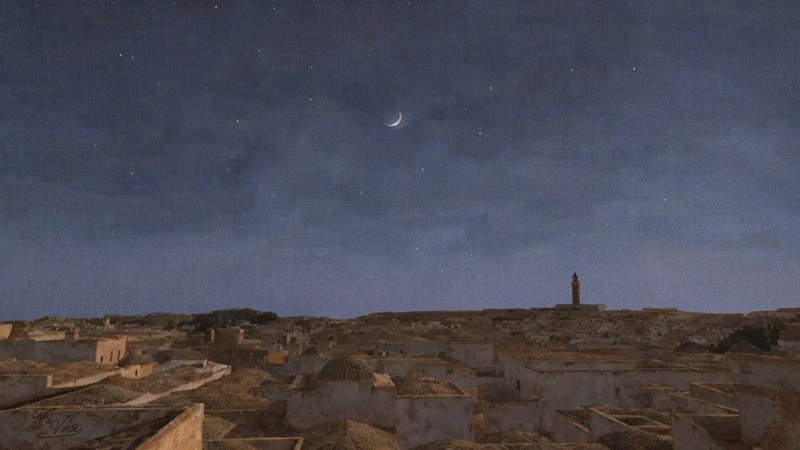
In 711, Arab and Berber forces crossed the Strait of Gibraltar under the command of Tariq ibn Ziyad and within a decade had overrun most of the Iberian Peninsula. The Visigothic kingdom, already weakened by dynastic conflict, collapsed with unexpected speed. Only the far north—the mountains of Asturias, the Basque territories, and the Pyrenean fringes—remained outside Muslim control, a geography that would matter enormously to Eulogius a century and a half later.
The Iberian territory under Muslim rule became known as al-Andalus, administered initially as a province of the Umayyad Caliphate centred in Damascus. That arrangement ended in 756, when Abd al-Rahman I—the sole surviving prince of the Umayyad dynasty after its overthrow in the east by the Abbasids—crossed into Iberia and established an independent emirate at Córdoba, refusing allegiance to the new caliphs in Baghdad. The Umayyad Emirate of Córdoba would govern al-Andalus for nearly three centuries.
The Arrival of Islam in Iberia
By the ninth century, Córdoba had become one of the largest and most sophisticated urban centres in the Latin West—a fact that bears directly on the story of the Cordoban martyrs. It was not a frontier outpost or a provincial town. It was a functioning capital: administratively organised, architecturally ambitious, and culturally productive.
The Great Mosque—begun by Abd al-Rahman I and enlarged by his successors
—embodied both the city's resources and the emirate's cultural ambition.
That sophistication created its own pressures. Córdoba was a city where Arabic was the language of power, administration, commerce, and learning. Latin survived within the Church, but Arabic was the prestige language of the educated classes, and the temptation—or necessity—of Arabisation was felt by Christian families across generations. Some converted to Islam, whether by conviction, convenience, or calculation. Those who did not existed within a legal and social framework that made their subordinate status a daily reality.
Córdoba: The City
Christians and Jews living under Islamic rule in al-Andalus held the status of dhimmī—protected non-Muslims tolerated on specific legal terms. In practice this meant: freedom to practise their own religion privately, the right to maintain existing churches (though not to build new ones or display the cross publicly), and the payment of the jizya, a poll tax that marked their subordinate status within the Islamic legal order. Apostasy from Islam was a capital offence. Public blasphemy against the Prophet carried the same penalty.
This framework was not, by the standards of the ninth-century world, unusually brutal. The dhimmī system offered a defined and legally protected space that many Christian communities across the Islamic world inhabited for centuries. But it was a system with edges, and those edges became increasingly visible as Arabisation deepened. Conversion to Islam removed the jizya. It granted access to positions in the emirate's administration. It carried social prestige. The rate of conversion across the ninth century, while impossible to quantify precisely, was substantial enough to alarm Christian leaders who could see their community's numerical weight declining.
The Dhimmī Framework
The Christians of al-Andalus are known by the term Mozarab—derived from the Arabic musta'rib, meaning 'one who has Arabised.' By the ninth century this community was not monolithic. It ranged from deeply Arabised urban families who used Arabic in daily life and had absorbed Islamic cultural forms while retaining nominal Christianity, to rigorist clergy who maintained Latin learning, preserved manuscript traditions, and saw accommodation as the first step toward apostasy.
Both tendencies were real, and both were under pressure. The Arabised Christians were accused, by men like Eulogius and Paul Alvarus, of abandoning their heritage and hastening the cultural dissolution of Latin Christian practice. The rigorists were accused, by more moderate Christian leaders, of deliberately provoking a government whose tolerance, however conditional, was the only protection the community had.
The Mozarabs
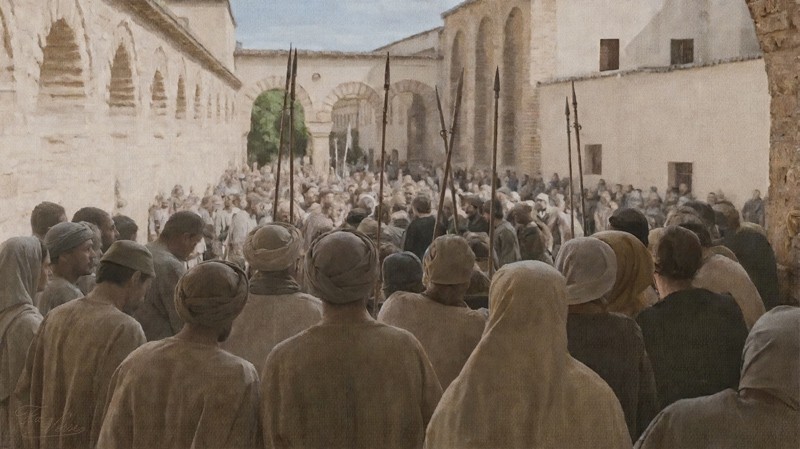
The reign of Abd al-Rahman II (822–852) is described in general reference works as politically effective and culturally prosperous. He was an able administrator who consolidated the emirate's institutions and extended its cultural reach. His court was cosmopolitan, his interest in music and letters genuine. The philosopher-musician Ziryab, who arrived from Baghdad in the 820s and transformed the cultural life of Córdoba's elite, exemplified the period's ambition.
For the Christian community, Abd al-Rahman II's reign was a period of increasing administrative pressure rather than outright persecution. Arabisation accelerated. The attraction of Islamic court culture was felt more acutely as the emirate's sophistication grew. And the government maintained its legal framework: the boundary between Islam and dhimmī Christianity was enforced, with apostasy and public blasphemy carrying their prescribed penalties.
Abd al-Rahman II and the Rise of Pressure
Abd al-Rahman II died in September 852, at the height of the martyrdom movement. His son Muhammad I (852–886) inherited a more turbulent situation: In 851, a group of Christians in Córdoba began presenting themselves before the Islamic court on charges of blasphemy against the Prophet—knowing the penalty was death. The movement that followed would define the final decade of Eulogius's life. Internal revolts were multiplying across the emirate, and the relationship between the government and its Christian subjects was acutely strained. Muhammad I's reign saw social dynamics within the emirate shift, pressures on the dhimmī community intensify, and the government's patience with Christian provocation shorten.
It was under Muhammad I that Eulogius would eventually be executed.
Muhammad I and the Shifting Atmosphere
The martyrdom movement that Eulogius led and defended was not simply a confrontation between Christians and Muslims. It was also—and this point is consistently emphasised in modern scholarship—a confrontation within the Christian community itself.
On one side stood Eulogius and Paul Alvarus, who valorised the martyrdoms as courageous witness and identity-affirmation, arguing that the martyrs had died defending the faith against cultural dissolution. On the other stood moderate Christian leaders—bishops among them—who viewed the voluntary self-presentation before Muslim judges as reckless provocation: tactically ruinous, theologically dubious, and a threat to the entire community's survival under a framework of tolerance that could easily be withdrawn. That division is the essential backdrop for everything Eulogius wrote. The Council of Córdoba, convened in 852 amid the executions, produced an ambiguous statement that discouraged the pursuit of martyrdom without condemning those already executed—a compromise that barely satisfied anyone or settled anything.
The Internal Christian Fault Line
The earliest biography of Eulogius was written by Paul Alvarus—a man who had known him since their shared schooldays under Abbot Speraindeo, corresponded with him throughout the martyr crisis, and survived to write his memorial. Their friendship is attested in their surviving letters and in the Vita itself, which is as much a memorial of their relationship as it is a biography. Alvarus's Vita, or any other primary source, does not record the birth year of Eulogius of Córdoba—nor, as Kenneth B. Wolf notes, any detail that would allow its reconstruction. Eulogius was born in Córdoba in the early 9th century, from a family Alvarus describes as of senatorial lineage, with generations of Christian identity maintained through ecclesiastical connection.
He had at least five siblings. His brothers Álvaro and Isidoro were merchants who traded as far as central Europe; his youngest brother Joseph held a senior position in the palace of Abd al-Rahman II—a detail that illuminates the divided reality of prominent Mozarabic families, simultaneously rooted in Christian tradition and participating in the structures of the Islamic emirate. His sisters Niola and Anulona are named in the sources; Anulona entered religious life from infancy and later became a nun.
His education was formed under Abbot Speraindeo at the church of St. Zoilus in Córdoba, a figure of considerable intellectual weight in the Mozarabic world. Speraindeo had written against Islam and was a shaping presence in the theological self-consciousness of Córdoba's rigorist Christian community. Under him, Eulogius received the Latin formation that would sustain his writing life: Scripture, patristic commentary, and the classical curriculum that the Mozarabic church had preserved in the face of Arabisation. Paul Alvarus received the same formation at the same school. The intellectual partnership between them was built on shared ground from the beginning.
Eulogius was ordained priest, though the date of his ordination is not recorded in the sources.
Birth, Family, and Formation
Around 848, while travelling to visit a brother who had entered religious life at a monastery near Zaragoza, Eulogius found his way blocked by political conflict in the region and was diverted into the Pyrenean frontier zone—the borderland between
al-Andalus and the Christian kingdoms of the north.
He visited a series of monasteries in the mountains of Navarre and the Rioja region, including foundations in the area associated with Leyre and San Millán de la Cogolla. At these houses he found what Córdoba's Arabising culture had thinned: Latin manuscripts. He gathered and transcribed texts—classical and patristic—and brought them back to the south. Among the works he encountered were Virgil, Juvenal, Horace, and Porphyrius, texts that circulated with difficulty in the Arabised urban culture of al-Andalus. The significance of this book-hunting is not merely antiquarian: it represents a deliberate act of cultural reconnection with the Latin Christian world whose dissolution Arabisation was hastening.
The letter he wrote to Wiliesind, Bishop of Pamplona, during or immediately after this journey, is among the most important documents in his corpus. It is addressed to a northern bishop who had sheltered and assisted him, and it serves as a map of his intellectual and political world. Eulogius explains why the routes home were unsafe
—naming a political conflict involving Charles the Bald, the rebel magnate William of Septimania, and Muslim power under Abd al-Rahman II—and describes his visits to the northern monasteries with evident warmth.
The letter matters biographically because it demonstrates that Eulogius's world was not sealed within Córdoba's Mozarabic community. He was aware of Carolingian frontier politics. He maintained contact with northern bishops. He positioned himself, and the cause he would soon be defending, within a wider Latin Christian horizon. The picture of total Mozarabic isolation from the Christian north—occasionally drawn in older accounts—does not survive the Pamplona letter.
The Journey North: Networks, Manuscripts, and the Pamplona Letter
The first sign of the crisis came in 850 with the execution of Perfectus, a priest of Córdoba whose case already exposed the deadly boundary around public denunciation of Islam. His death did not yet create the full pattern that followed, but it showed how quickly a dispute over words could become a capital case.
In early June 851, a former government official named Isaac went before the qadi of Córdoba, Muhammad ibn Ziyad, and publicly denounced the Prophet Muhammad. The act was treated as blasphemy, and Isaac was executed on 3 June 851.
Over the next eight years, close to fifty Christians in Córdoba would present themselves, or be brought before Islamic authorities, on charges of blasphemy or apostasy and be executed. Some had previously converted to Islam and returned to Christianity—apostasy in the legal sense, carrying the death penalty under Islamic law. Others, like Isaac, were Christians who had never converted but who deliberately made public statements calculated to bring the blasphemy penalty upon them.
Modern scholarship has spent considerable effort debating whether these deaths should be called voluntary martyrdom, suicidal provocation, or something more nuanced still. The division already existed in Córdoba itself. On one side stood Eulogius, Alvarus, and those who honoured the condemned as true martyrs, seeing their deaths as a witness against the pressure hidden beneath the emirate’s formal tolerance. On the other side stood a larger and more cautious Christian body
—including churchmen, families, and members of the local community—who judged the movement reckless, unnecessary, and dangerous. They argued that no direct command to renounce Christ had forced these confrontations, and that the repeated public provocations exposed the whole Christian population to greater danger. Eulogius’s response to that division became the substance of his writing life.
The Martyrdom Movement Begins
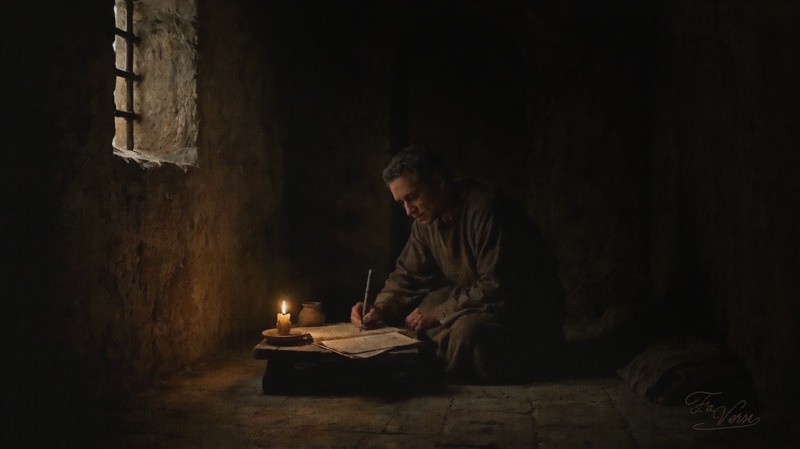
In the autumn of 851, Eulogius was arrested. The precise charge is not stated in the sources, but the arrest occurred in the context of the government's effort to suppress the martyrdom movement and punish those who encouraged it. He was imprisoned in Córdoba alongside Flora and Maria, two women who were among those facing execution as part of the movement.
The Documentum Martyriale—the first of his major works—was written inside the prison for their benefit, probably in late October 851. It is addressed directly to the two women and is simultaneously an act of pastoral support and a theological apologia: an argument that their deaths would constitute genuine martyrdom, that their situation was analogous to the persecutions of the Roman era, and that they should not be deterred by the Christian voices insisting that the movement was illegitimate.
The work is small in compass but precise in purpose. It draws on Augustine, on the Roman martyr tradition, and on Scripture to build a defence of what the women were about to do. That defence was also, in effect, a public declaration of Eulogius's own position at the moment when that position was most dangerous.
Flora and Maria were executed in November 851. Eulogius was released, probably in early 852. The grounds for his release are not stated in Alvarus's Vita, and modern scholarship does not offer a confident reconstruction.
Imprisonment and the Documentum Martyriale (851)
The Memoriale Sanctorum is the centrepiece of Eulogius's corpus—a narrative of the martyrdom movement compiled across several years of writing, in three books composed in stages between 851 and 856. It is the largest continuous source for the Cordoban martyrs and the primary document through which the movement is known to history.
The work is not a neutral chronicle. Eulogius writes as a committed apologist whose purpose is explicit: to establish that those who died were genuine martyrs, to defend the movement against its internal Christian critics, and to preserve the memory of the dead in a form that would secure their veneration. The narrative of individual martyrdoms is framed within an extended theological argument about the legitimacy of voluntary witness—drawing on patristic precedent, on the logic of martyrology, and on a reading of the Islamic legal framework as constituting genuine persecution.
Modern scholarship has consistently emphasised that the Memoriale's presentation of martyrdom is shaped by inherited templates—Roman-era martyr tropes, late antique apologetic models, and hagiographic typologies drawn from eastern Christian tradition—and that these frameworks can be historically informative about community psychology and polemical strategy without constituting straightforward reportage. Eulogius writes through a genre, and genre shapes what he sees and how he describes it.
That critical point does not diminish the document's value. Embedded within the Memoriale are details that no later writer could have invented: the names of the martyrs, the churches and monasteries of Córdoba, the clergy and communities targeted by government pressure, the texture of daily life in the Mozarabic quarter. These details survive because Eulogius was there. The apologetic frame is the complication; the embedded testimony is the asset.
The Memoriale Sanctorum (851–856)
The Liber Apologeticus Martyrum, commonly dated to around 857, is widely treated as Eulogius's last major work—positioned as a sequel and extension of the Memoriale's programme, likely composed when the Memoriale was substantially complete. It is shorter and more concentrated than the Memoriale: a focused defence of the movement aimed at answering the continuing internal objections, and an argument that the government's treatment of the Christian community constituted a form of persecution even when it operated within legal forms.
The Liber Apologeticus shows Eulogius's position hardening rather than softening as the decade advanced. The tone is less pastoral and more combative. The awareness that the movement has remained contested, that the council did not vindicate it, that the executions continue without producing community-wide recognition, sharpens the work's tone considerably.
The Liber Apologeticus Martyrum (c. 857)
Alvarus's Vita records that, after the death of Archbishop Wistremirus of Toledo, the bishops of the province elected Eulogius to succeed him. The election is explicitly attested and treated as binding—Alvarus states that the electors refused to choose anyone else while Eulogius still lived. He was never consecrated and never exercised jurisdiction over Toledo.
Alvarus describes the failure to reach consecration as divine providence placing obstacles in Eulogius's path, but does not specify their nature. Wolf proposes, as interpretive conjecture rather than stated fact, that Eulogius's open conflicts with the Córdoba ecclesiastical hierarchy and his legal confinement in the city were the likely impediments.
The chronology cannot be tightened beyond what the sources force. Eulogius's letter to Wiliesind, dated 851, refers to Wistremirus as alive during the earlier northern journey—so his death and Eulogius's election must fall somewhere in the interval between 851 and the martyrdom in 859. Any narrower dating depends on later episcopal lists and modern reconstruction rather than on Alvarus or Eulogius directly.
The 'archbishop-elect of Toledo' designation found in early print conventions and BHL notices is a later editorial label. The Vita's body text uses ordinary episcopal vocabulary, and the BHL catalogues Eulogius primarily as presbyter Cordubensis. The title is a reasonable shorthand for a genuine election that did not reach consecration
—but it is not a ninth-century formulation.
Election to the See of Toledo
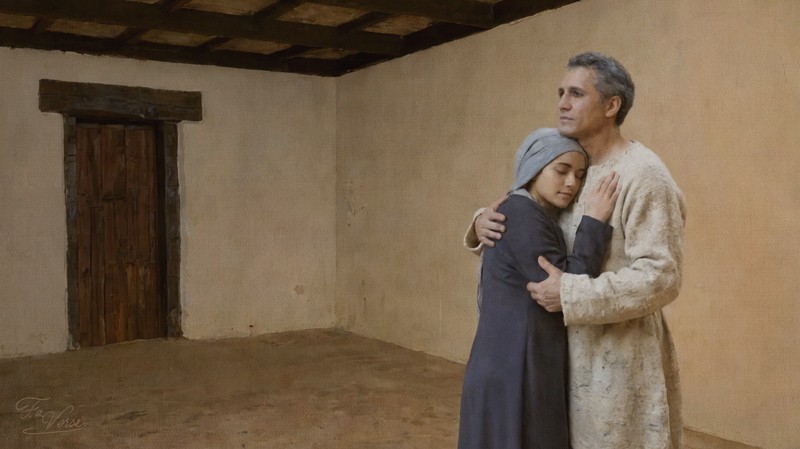
In late winter 859, Eulogius was arrested for the last time. The circumstances are described in Alvarus's Vita: he had given shelter to a young woman named Leocritia, who had been born to a Muslim family but had converted to Christianity. Under Islamic law, her conversion from Islam constituted apostasy—a capital offence. By sheltering her, Eulogius had placed himself in direct legal jeopardy.
Alvarus presents Eulogius as sheltering her in fulfilment of a Christian obligation to protect a convert—a framing that treats his act as deliberate witness rather than accidental exposure. Whether this represents his own stated reasoning under interrogation, Alvarus's interpretation, or some combination of the two, cannot be determined from the surviving text. The transmission problem noted below—the dependence of the entire corpus on Morales's 1574 transcription—bears on this point as on others.
Leocritia and the Final Arrest
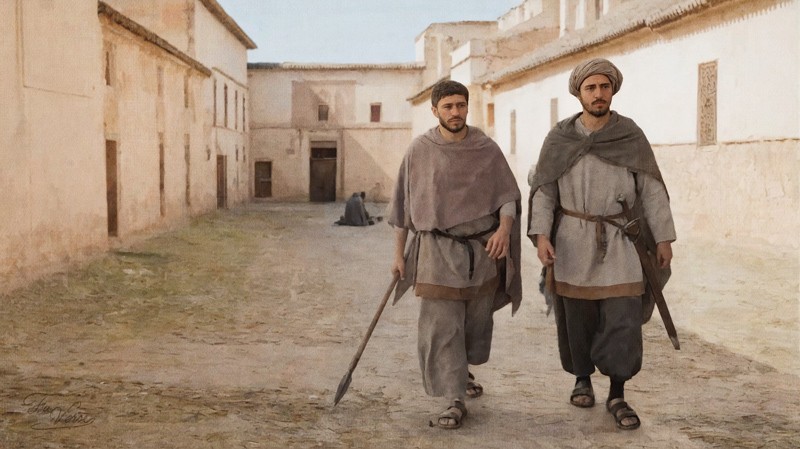
Eulogius was brought before the qadi Muhammad ibn Ziyad. Alvarus's Vita describes the interrogation: Eulogius was offered the opportunity to recant, or at minimum to moderate his position sufficiently to avoid execution. He refused. According to Alvarus, he defended the obligation to shelter converts and refused to condemn those who had chosen martyrdom.
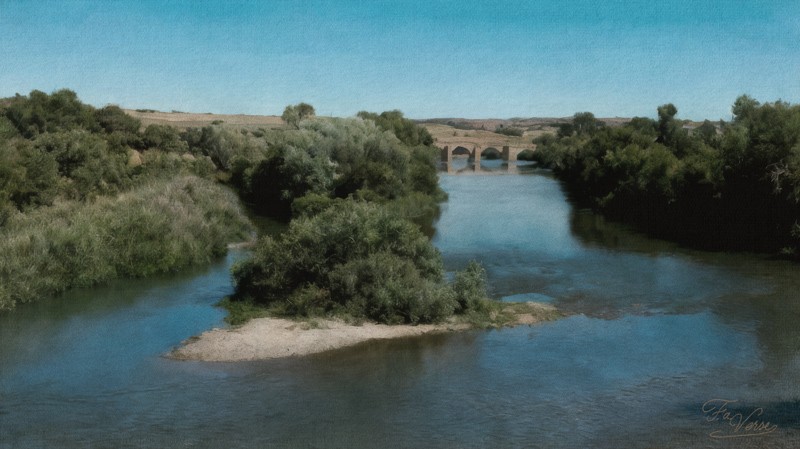
He was struck by one of those present—an act Alvarus records in terms that recall the tradition of the slapping of Christ before Pilate—and then handed over for execution. He was beheaded on 11 March 859. Following the execution, the body was thrown into a river channel. The disposal of the body in this manner is recorded explicitly in Alvarus's Vita. Leocritia was imprisoned following the arrest, and executed four days after Eulogius, on 15 March 859.
The execution date is the single most stable element in the entire dossier. It is fixed in the hagiographic catalogue, in Alvarus's Vita, and in the subsequent liturgical tradition. Whatever uncertainties attend the texture of the Memoriale's narrative, the death of Eulogius on 11 March 859 is not among them.
Interrogation and Execution (11 March 859)
The Vita vel Passio beatissimi martyris Eulogii—catalogued as BHL 2704—was composed by Paul Alvarus after the execution, almost certainly within the same year. It is the earliest coherent biography of Eulogius, written by a man who had known him since their shared schooldays under Speraindeo, had corresponded with him throughout the martyr crisis, and now survived to write his memorial.
Alvarus's Vita is not a neutral document. It is a hagiographic commemoration written by a committed ally, shaped by the same apologetic purposes that animate Eulogius's own works. It frames Eulogius's life and death within the logic of martyrdom that the two men had spent years defending together. It is exactly the kind of source that must be used with full awareness of its genre and its author's position—and it is simultaneously the closest witness we have to the man.
Together with the Indiculus Luminosus (854), in which Alvarus had already contributed to the internal Christian debate, the Vita forms the second half of the dossier's earliest layer.
Paul Alvarus and the Vita (post-March 859)
In June 859, three months after his execution, Eulogius's body was translated to the basilica of St. Zoilus in Córdoba—the church where he had been educated and to which he had lifelong attachment. The near-contemporary translation notice in the Alvaran dossier records this explicitly, identifying him as martyr and doctor, and explaining that because 11 March invariably falls in Lent, the feast was locally observed at the shrine on the translation date instead.
According to a tradition that modern scholarship treats with cautious acceptance, the relics of Eulogius were translated from Córdoba to Oviedo in early 884, as part of a diplomatic arrangement between Muhammad I of Córdoba and Alfonso III of Asturias. With the relics—the tradition further states—travelled a codex containing Eulogius's complete writings.
The codex remained, according to this account, in the library of Oviedo Cathedral until it was discovered again in the sixteenth century. Pedro Ponce de León arranged access to it; the historian Ambrosio de Morales produced a transcription and a printed edition in 1574, which became the foundation for all subsequent transmission of Eulogius's works. After Morales's edition, the medieval codex itself disappeared.
This transmission history is the most structurally significant problem in the entire dossier, and it must be stated plainly. Modern studies have repeatedly cautioned that Morales's transcription is reworked and may include editorial intervention. Every printed version of Eulogius's works—including the standard modern critical edition by Juan Gil in the Corpus Scriptorum Muzarabicorum (CSIC, 1973), and Gil's revised Brepols edition of 2020—is downstream of a sixteenth-century act of transmission that cannot be independently checked against the medieval original. Fortunately, Paul Alvarus's Vita survives in a tenth-century copy held at the Biblioteca Nacional in Madrid, providing one independent textual strand outside the Morales transmission.
The practical consequence for biography is that arguments based on precise phrasing in Eulogius's polemic, or on specific narrative details in the Memoriale, carry a text-critical uncertainty that cannot be resolved. What can be said with confidence is what the corpus claims—the movement it describes, the arguments it makes, the names and events it records. What cannot be said with full confidence is that every phrase and detail descends unaltered from Eulogius's pen.
The Translations and the Textual Survival Problem
The earliest recorded response to Eulogius's death is preserved in Alvarus's Vita itself. Alvarus describes the body being thrown into a river channel following the execution, and records that at that moment a dove of conspicuous whiteness settled upon it. Bystanders attempted to drive the bird away—first with stones, then by hand—and it persisted. Alvarus frames the episode explicitly as a miracle worked by Christ upon the martyr's body. Whether this account reflects eyewitness testimony, hagiographic convention, or both cannot be determined from the surviving text; what is clear is that it belongs to the earliest stratum of the Eulogian dossier, written by the man closest to the events.
The earliest devotional layer is embedded in the Alvaran dossier itself. Alongside the Vita, the manuscript complex preserves a feast-specific hymn—incipit Almi nunc redeunt—keyed explicitly to 11 March, the dies natalis. The same complex carries the translation notice, a verse Epitaphium, and the Oratio Alvari, a prayer formula composed by Alvarus for commemorative use. These are ninth-century or near-ninth-century materials, composed specifically for this cult rather than drawn from generic common forms.
The title Doctor, which appears three times in this earliest layer—in Alvarus's Praefatio, in the translation notice, and in the Epitaphium—reflects the community's perception of Eulogius as teacher and intellectual authority, not merely as martyr. It is one of the most consistently used honorifics in the tradition and is grounded in his written corpus rather than in legend.
The feast of Eulogius is fixed on 11 March in the Roman Martyrology, the date of his execution. A diocesan calendar notice from Oviedo Cathedral places Santos Eulogio, presbítero, y Lucrecia (Leocritia) on 9 January—a local observance reflecting Oviedo's role as custodian of his relics, distinct from the wider March date.
The martyrological tradition shows some calendar instability: Usuard's martyrology places him in the September sequence rather than March, suggesting that at least one medieval stream circulated his commemoration under a different calendar slot
—whether through local calendar drift, assimilation to other Cordoban commemorations, or compilation error.
The diffusion of the Cordoban martyrs' cult into the wider Latin West is, in general, better attested for other martyrs of the movement than for Eulogius specifically. A notable episode is the translation of Cordoban relics to Paris, narrated in the ninth century by Aimoin of Saint-Germain-des-Prés—evidence of Carolingian engagement with Iberian sanctity and relic acquisition that modern scholarship has studied carefully. Whether Eulogius's own cult was part of this diffusion in any substantial way is not clearly established.
Within Iberia, the Passionary of Silos preserves Eulogius and Leocritia—evidence of selective reception rather than blanket adoption of the Cordoban martyrs' cult in northern Iberian liturgical tradition. The Calendar of Córdoba (961), despite its value as a source for tenth-century ecclesiastical topography in the city, does not index Eulogius in a way that suggests his cult was locally prominent at that date—a detail modern scholarship has noted as a limiting indicator for reconstructions of his Cordoban cult footprint.
By the late premodern period the cult was fully institutionalised in Córdoba. The diocesan proper office-book Officia propria sanctorum Cordubensis Ecclesiae (1794) fixes 11 March as a duplex feast, uses the common martyr hymn Deus tuorum militum at Vespers, and carries a contextual collect explicitly framing Eulogius as divine consolation in an age of turmoil. The office's lections draw directly on Alvarus and on Eulogius's own writings—including transmitting the archbishop-elect of Toledo tradition as part of the saint's official liturgical story.
In the built environment, the Chapel of San Eulogio attached to the Mosque-Cathedral complex of Córdoba dates its construction to 1618 and belongs to a Counter-Reformation presentation of his cult rather than to any continuous medieval devotional practice on the same site. The major surviving pictorial representation is the large canvas by Vicente Carducho (c. 1620–1630), documented in the Mosque-Cathedral's own catalogue, which explicitly connects Eulogius to his authorship of the Memoriale and restates the Oviedo translation tradition. Both works are seventeenth-century products shaped by confessional politics rather than early medieval cult memory.
Cult Development
Paul Alvarus, Vita vel Passio beatissimi martyris Eulogii (BHL 2704), in Juan Gil, ed., Corpus Scriptorum Muzarabicorum, 2 vols. (Madrid: CSIC, 1973); revised edition: Scriptores Muzarabici Saeculi VIII–XI, Corpus Christianorum Continuatio Mediaevalis LXVa–LXVb (Brepols, 2020)
Paul Alvarus, Indiculus Luminosus (854), in Gil, Corpus Scriptorum Muzarabicorum
Eulogius of Córdoba, Memoriale Sanctorum, in Gil, Corpus Scriptorum Muzarabicorum; also Patrologia Latina 115
Eulogius of Córdoba, Documentum Martyriale, in Gil, Corpus Scriptorum Muzarabicorum
Eulogius of Córdoba, Liber Apologeticus Martyrum, in Gil, Corpus Scriptorum Muzarabicorum
Eulogius of Córdoba, Epistula ad Wiliesindum, in Gil, Corpus Scriptorum Muzarabicorum
Aimoin of Saint-Germain-des-Prés, De translatione SS. Martyrum Georgii monachi, Aurelii et Nathaliae ex urbe Corduba Parisios
Bibliotheca Hagiographica Latina (BHL), Bollandist catalog
Ambrosio de Morales, edition of Eulogius's works (1574)
Officia propria sanctorum Cordubensis Ecclesiae (1794)
Primary Sources
Edward P. Colbert, The Martyrs of Córdoba (850–859): A Study of the Sources (Washington DC: Catholic University of America Press, 1962)
Jessica A. Coope, The Martyrs of Córdoba: Community and Family Conflict in an Age of Mass Conversion (Lincoln: University of Nebraska Press, 1995)
Kenneth Baxter Wolf, Christian Martyrs in Muslim Spain (Cambridge: Cambridge University Press, 1988)
Kenneth Baxter Wolf, The Eulogius Corpus (translation with introductory study, Liverpool University Press, 2021)
Kenneth Baxter Wolf, 'Immortalizing the Martyrs of Córdoba,' Visigothic Symposia 4 (2020), pp. 206–227
Ann Rosemary Christys, Christians in al-Andalus, 711–1000 (Richmond: Curzon Press, 2002)
Kati Ihnat, survey articles on the Cordoban martyrs dossier (cited in source-critical dossier)
Bonnie Effros, on Usuard's Spanish journey and the Saint-Germain relic translations (cited in source-critical dossier)
Joseph F. O'Callaghan, A History of Medieval Spain (Ithaca: Cornell University Press, 1983)
Juan Gil, ed., Corpus Scriptorum Muzarabicorum, 2 vols. (Madrid: CSIC, 1973)
Mezquita-Catedral de Córdoba, official catalogue entry for Vicente Carducho, Saint Eulogius (c. 1620–1630)
Secondary Sources
Honour Saint Eulogius with us in prayer and scripture.
This video tribute invites you to reflect on his witness to Christ, unite your petitions
with his intercession, and remember his martyrdom and faithfulness unto death.
