
ENTER OUR VIDEOS
RECEIVE OUR WORK
Enter the full collection of our
tributes to Saints on YouTube.
Be notified quietly by email of our prayers,
reflections and new videos, free of charge.
Saint Ursus of Aosta
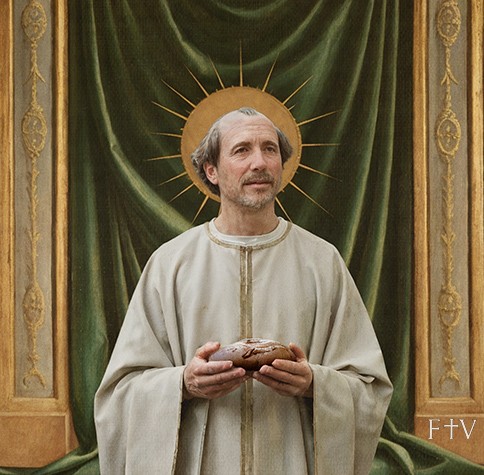
Saint Ursus of Aosta–Patronage & Symbols
Born: Unknown, likely second half of 5th century
Died: Aosta, Valle d'Aosta, Italy, date unknown (traditionally 1 February 529)
Traditional Feast Day: 1 February—Honoured for his charitable work among the poor and sick of Aosta, and for his role in establishing early Christian worship in the Valle d'Aosta.
Canonized: Pre-Congregation—cult attested from at least the 9th century; vitae composed 9th-12th centuries preserved local tradition and regional veneration
Patron Of: Aosta and the Valle d'Aosta region; invoked against natural disasters, floods, livestock diseases, back pain, kidney disease, and rheumatism; invoked in childbirth and for children who die before baptism
Symbols in Art: Shepherd's crook, small bird (sparrow), scenes of charity to the poor
Invoked For: Protection against calamities, healing of physical ailments, safe childbirth, care for the poor and orphaned
Ursus, Orso, Ours
Saint Ursus was a confessor who died peacefully.
External sources written centuries later—Rabanus Maurus (9th c.)
and Gozwin (11th c.)—claim he was martyred alongside Saint Alban of Mainz by Arians.
The local Aosta tradition, preserved in 9th-12th century vitae composed in the city itself, consistently presents Ursus as a peaceful priest under Bishop Jucundus who died naturally on 1 February 529.
The martyrdom narrative likely represents confusion with Ursus of Solothurn, a 3rd-century martyr of the Theban Legion. "Ursus" (bear) was a common Latin name.
The Aosta community rejected the external martyrdom claims in favor of their own continuous local memory.
Was Saint Ursus of Aosta Martyred?
The claim that Saint Ursus was Irish appears nowhere in sources until the 16th century—a thousand years after his death—yet is repeated in several modern sources.
The earliest vitae (9th-12th centuries) provide no information about his birthplace or origin. Later legends claimed he was Irish, from Auvergne (France), or even a bishop in Beja (Portugal)—all rejected by modern scholarship as hagiographic drift.
It would be extremely unlikely that sources written closest to his lifetime would omit such a significant detail as foreign missionary origin. Modern historians conclude Ursus was almost certainly local to the Aosta Valley, not a foreign missionary.
Was Saint Ursus of Aosta Born in Ireland?
Remembering Saint Ursus
Modern sources routinely describe Saint Ursus as a 6th-century archdeacon or priest of Aosta who lived a life of extraordinary charity and founded churches in the Alpine valley. Some traditions claim he was martyred alongside Saint Alban of Mainz while travelling as a missionary. Others present him as a peaceful confessor who died quietly in old age after decades of service to the poor.
These accounts conflict with one another and rest on sources written centuries after the events they describe. The historical Ursus—if he existed—left no contemporary trace. What remains is a regional cult rooted in devotion, landscape, and the enduring memory of a holy man whose name became inseparable from the city of Aosta itself.
The earliest reference to Saint Ursus appears in the 9th-century martyrology of Rabanus Maurus, which records under 21 June that Saints Alban, Theonestus, and Ursus travelled from Milan into Gaul "willing to suffer martyrdom," and that Ursus was killed "in the city of Augusta" (Aosta). An 11th-century Passion of Saint Alban by Gozwin repeats this tradition, claiming Ursus was martyred by Arians.
This martyrdom narrative conflicts entirely with the later tradition preserved in two Latin vitae of Ursus composed in Aosta itself. The earlier vita (BHL 8453b) dates to approximately 876–925 and survives in scattered manuscripts from the 11th century onwards. A longer, expanded vita (BHL 8453) was composed in the 12th century, likely during the Augustinian reform of the canons of Sant'Orso. These vitae present Ursus not as a martyr but as a peaceful priest and archdeacon under Bishop Jucundus of Aosta (died c. 524), a man known for his charity, humility, and care for orphans and the poor.
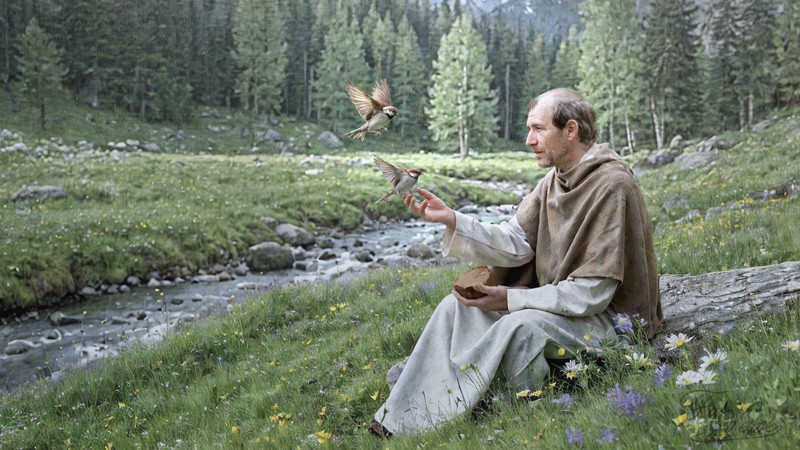
The vitae describe Ursus harvesting grain but leaving much of it in the field for the poor and for birds; refusing to eat except in the presence of the needy; and performing various miracles, including providing wine for monastery workers and healing the sick. They also introduce a villainous Bishop Ploceanus who opposes Ursus—a figure who appears in no other historical record and seems to belong to the realm of hagiographic storytelling rather than documented history.
This reversal is unusual in medieval hagiography. Typically, later traditions amplify drama—adding miracles, conflict, and martyrdom where earlier sources record peaceful deaths. With Ursus, the opposite occurred: the martyrdom narrative, preserved in external martyrologies, was set aside by the local Aosta community in favour of a quieter story of charitable service. This suggests the peaceful tradition may preserve genuine local memory, while the martyrdom legend may reflect confusion with other saints named Ursus or attempts to connect Aosta's saint to broader missionary narratives.
No episcopal charters, inscriptions, or archaeological evidence from the 6th century mentions Ursus. Excavations in 1972-73 beneath the Collegiate Church of Sant'Orso uncovered a 5th-century apse and Roman tombs, but no dateable inscription or relic confirming his existence. The cult is attested from the 9th century onwards, but the man himself left no contemporary record.
What the Sources Actually Say

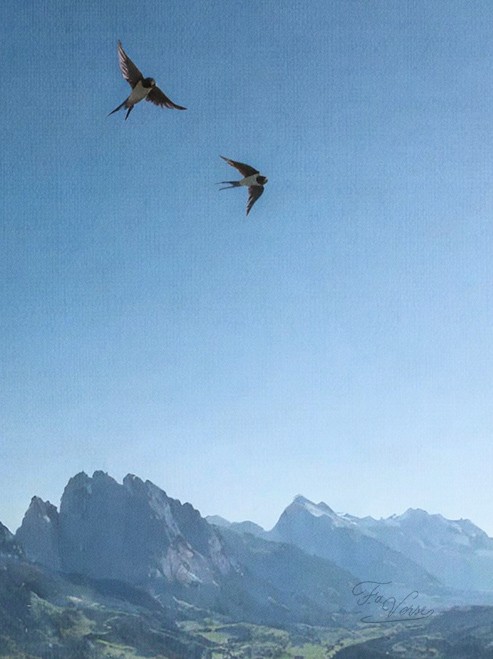
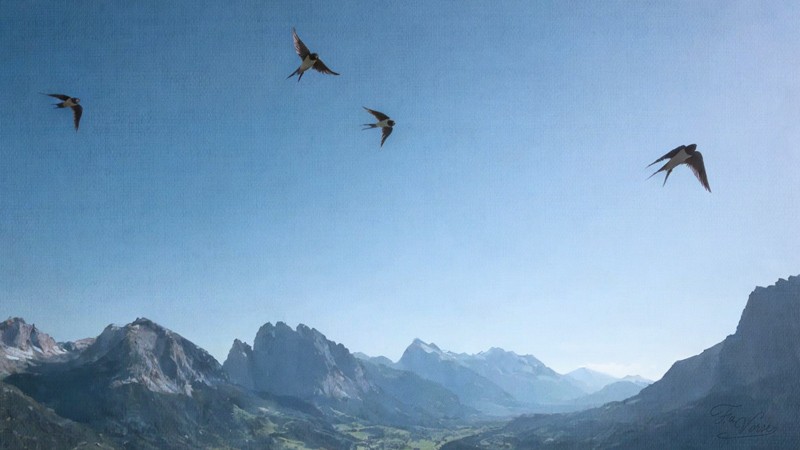
Monte Cervino (the Matterhorn) rises above Lago Blu in the Valtournenche, Valle d'Aosta
—the mountain valleys where Saint Ursus preached the Gospel in the sixth century.
In Ursus's supposed lifetime, the Aosta Valley was a frontier region of contested power. The Ostrogoths (Arian Christians) ruled northern Italy until the Byzantine-Gothic wars of the 530s-550s, when Frankish influence expanded into the Alps. Aosta was a small bishopric; Bishop Jucundus (San Giocondo) appears in church council records from 501-502 and is believed to have died around 524. If Ursus served under Jucundus, this would place him in the early-to-mid 6th century.
The vitae consistently call Ursus an archdeacon or priest, never a bishop. Although many modern sources describe him as a bishop, this appears to be an error—likely confusion with Saint Ursus of Ravenna (d. c. 425), who was the 16th Bishop of Ravenna. The earliest vita (9th century) explicitly identifies him as "presbyter," and the current Roman Martyrology lists him simply as "sacerdote" (priest). Scholarly sources have identified the bishop designation as erroneous since at least the 19th century. Hagiographic tradition credits him with founding or revitalizing the church of San Lorenzo (later Sant'Orso) outside Aosta's walls, though no pre-medieval charter confirms this. Some later sources claim he founded the Abbey of San Giusto or became a monk there, but modern scholars find no evidence for these claims.
The legend of his Irish or Auvergnat origin—appearing in some 12th-14th century manuscripts—is now understood by scholars as confusion with other saints or later embellishment. A claim that he was once "bishop of Pax Augusta" (Beja, Portugal) finds no support in the historical record. Ursus was almost certainly local to Aosta, not a foreign missionary.
The Historical Context: Aosta in the 6th Century
Very little.
A Christian cleric named Ursus was venerated in Aosta from at least the 9th century. His cult centred on a church outside the city walls (Sant'Orso), where his relics were said to rest. He was remembered as a man of charity and humility. Beyond this, almost nothing can be verified.
What Can Be Said with Confidence?
Nearly every vivid detail of Ursus's life comes from the 9th-12th century vitae. The famous image of Ursus leaving grain in the field for birds and the poor is a narrative device emphasizing charity, not a verifiable fact. The story of his refusal to eat except with orphans echoes Matthew 25:34-35 and serves to illustrate holiness, not document daily practice.
The conflict with Bishop Ploceanus—complete with the bishop's attempts to poison Ursus, only to have the wine miraculously transformed—follows familiar patterns in medieval saints' lives. No Bishop Ploceanus of Aosta appears in any historical record. The martyrdom tradition linking Ursus to Saint Alban of Mainz appears only in 9th-11th century martyrologies and may represent a conflation of multiple saints named Ursus (a common Latin name meaning "bear").
The Venetian legend of relics floating to Burano in a marble sepulchre belongs to a rich tradition of relic legends rather than documented history. Late medieval sources offer exotic origins for Ursus—Irish, Auvergnat, even a claim he was a cobbler from Ireland—but these have no basis in early texts. Scholars understand these as later attempts to link Aosta's local saint to broader missionary narratives.
The Legendary Overlay
Ursus's cult remained intensely local. His feast day, 1 February, was observed in Aosta and surrounding valleys. The annual Fiera di Sant'Orso (Fair of Saint Ursus), held on 30-31 January on the eve of his feast day, has drawn visitors for centuries and continues today as a major cultural event in Aosta.
His relics are traditionally enshrined in the Collegiate Church of Saints Peter and Ursus (Sant'Orso) in Aosta. A Romanesque crypt built around 1000 AD houses his tomb. A 15th-century wooden statue and a 1359 reliquary chest are said to contain his relics, though no early written record of their translation survives.
Pilgrimage to Sant'Orso was common in the medieval period. The 12th-century cloister attached to the church features historiated capitals depicting scenes from Ursus's legend, including him distributing shoes to the poor and confronting Bishop Ploceanus. Other capitals show birds perched on his shoulders and scenes of charitable acts, visually reinforcing the scriptural themes of the vitae. These carvings reflect how the cult shaped local identity and memory.
Beyond Aosta, Ursus's veneration was minimal. He appears in some medieval martyrologies, and a few churches in the Valle d'Aosta bear his name (San Orso in Cogne, San Orso in Derby). The tradition linking him to Mainz (via the Alban martyrdom legend) gave him minor recognition in Germany, and the Burano legend introduced him to Venice, but no significant cult developed outside his home region.
Cult, Relics, and Regional Devotion
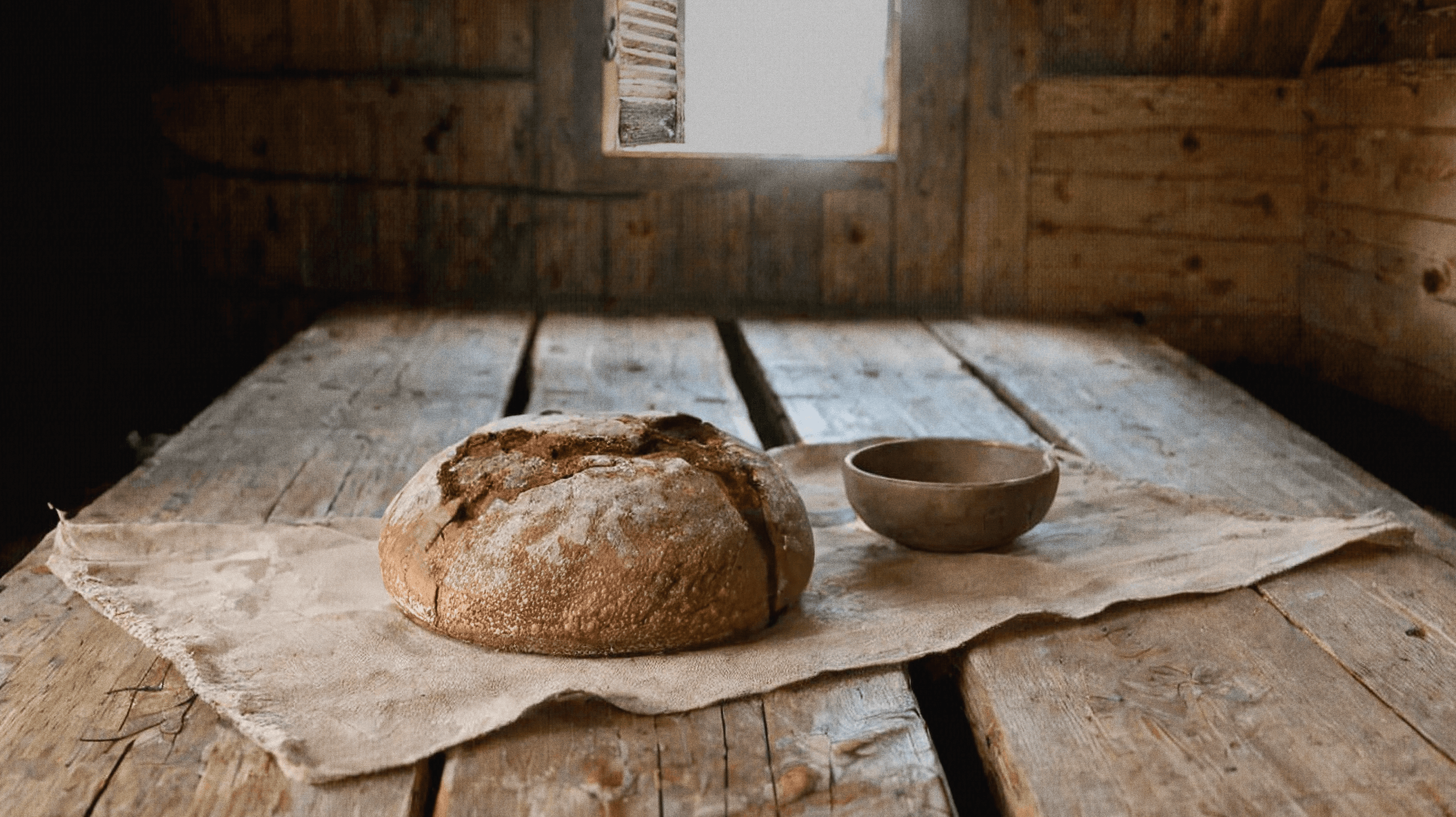
Saint Ursus is remembered in tradition for his charity to the poor—distributing the fruits of his labour to those in need.
The bread of the Valle d'Aosta is made from rye, as wheat struggles to grow in the high Alpine climate.
In art, Ursus is shown as a humble cleric engaged in charity. The bird-on-shoulders motif appears in medieval capitals at Sant'Orso, reflecting the grain-and-sparrows legend. A 15th-century altarpiece (now in Turin) depicts him distributing shoes to the poor, emphasizing his care for the needy.
He is typically shown in priestly vestments or as a kneeling figure in prayer. He does not carry a martyr's palm (the peaceful tradition prevailed over the martyrdom narrative) or episcopal regalia (no solid evidence supports him being a bishop).
His patronage developed from local devotion and folk tradition. He is invoked as patron of Aosta and the Valle d'Aosta. Popular devotion associates him with protection against natural disasters, floods, and livestock diseases, as well as healing from back pain, kidney disease, and rheumatism. These patronages likely arose from miracle stories told at his shrine rather than from documented historical practice.
Iconography and Patronage
Current scholarship treats Ursus as a probable 6th-century local holy man whose historical footprint was small and whose memory was preserved and embellished by later tradition. The consensus: he likely existed, served as a cleric in Aosta, and was venerated after his death. Everything else—miracles, martyrdom, church foundations, conflicts with bishops—belongs to hagiographic legend.
Historians emphasize that the earliest evidence for his cult comes centuries later. The vitae were composed 300-600 years after his death by authors with no access to contemporary sources. Archaeological work has confirmed early Christian structures at Sant'Orso but found no inscription or artefact directly tied to a 6th-century Ursus. The 1972-73 excavations revealed a 5th-century church and medieval tombs beneath the high altar, consistent with the cult's antiquity but not proof of Ursus's historical existence.
Modern critical editions of the vitae (by Papone & Vallet, 2000; Frutaz, 1966; and in the Bollandist Acta Sanctorum) have clarified the manuscript tradition and textual history, but they cannot recover a historical figure behind the legend. As one scholar concluded, "the author simply built a story on [Ursus's] name and a list of Scripture verses."
Saint Ursus remains what he has always been: not a documented historical figure, but a beloved saint of Aosta—a name, a church, a tradition of charity, and a memory that has endured for over a millennium in the Alpine valleys where he is still honoured each winter.
Modern Scholarship and the Limits of Knowledge

Vita S. Ursi (BHL 8453, 8453b), 9th-12th centuries. Printed in Acta Sanctorum, Feb. vol. 1 (pp. 937-939); Papone & Vallet, Storia e liturgia nel culto di S. Orso (2000).
Rabanus Maurus, Martyrologium (9th century), entry for 21 June.
Gozwin, Passio Sancti Albani (11th century).
Primary Sources
Papone, P. & Vallet, F., Storia e liturgia nel culto di S. Orso (2000).
Frutaz, A. P., Le fonti per la storia della Valle d'Aosta (1966).
Thurston, H., "Ursus of Aosta," Catholic Encyclopedia (1913).
Mucciolo, C. D., "The Augustinian canons of St. Ursus" (Academia, 2023).
Stracke, R., "The Saints Named Ursus in Art," Christian Iconography.
Local traditions: diocesan calendars, Sant'Orso pilgrimage records, Fiera di Sant'Orso.
Secondary Sources
This biography draws on the 9th-12th century vitae and medieval calendars accessed through critical editions and modern scholarship on Alpine Christianity. It distinguishes the minimal historical core (a cleric named Ursus venerated in Aosta from at least the 9th century) from later hagiographic elaboration (miracles, martyrdom, church foundations, invented bishops). Where sources conflict or legendary material dominates, this is noted explicitly. The approach follows current scholarly consensus that Ursus was likely a real person whose memory was preserved and shaped by centuries of devotion, but whose actual life remains almost entirely unknown.
Note on Methodology
Honour Saint Ursus with us in prayer and scripture.
This video tribute invites you to reflect on his humble service, unite your petitions
with his intercession, and remember his faithful charity in hidden ways.
