

ENTER OUR VIDEOS
RECEIVE OUR WORK
Enter the full collection of our
tributes to Saints on YouTube.
Be notified quietly by email of our prayers,
reflections and new videos, free of charge.
Saint Valentine of Rome
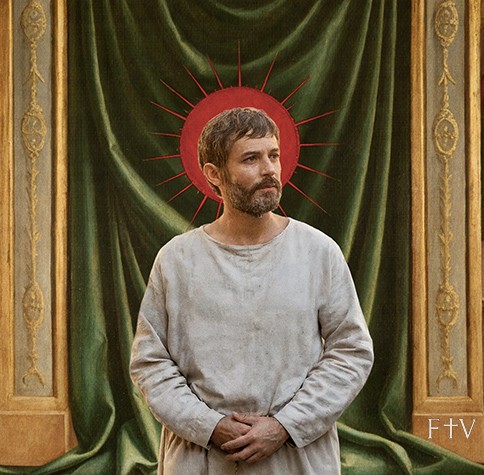
Saint Valentine of Rome–Patronage & Symbols
Born: Unknown, most likely 3rd century Italy
Died: c. 269, Rome, under Emperor Claudius II Gothicus; martyred on the Via Flaminia
Traditional Feast Day: 14 February—honoured for his martyrdom and witness to Christ; venerated continuously since the fourth century
Canonized: Pre-Congregation—cult attested from at least the mid-fourth century (Chronography of 354); basilica built over his tomb 337–352 by Pope Julius I; Damasian inscription fragments (366–384) confirm veneration
Patron Of: Medieval tradition (8th–13th centuries): healing saint, protector against epilepsy and fainting fits, protection against plague and illness
Symbols in Art: Clerical or episcopal vestments (priestly robes or bishop's mitre), palm of martyrdom, occasionally depicted with epileptic child representing healing intercession
Invoked For: Protection against epilepsy and seizures, healing of physical ailments, protection against plague, intercession for priests facing persecution, faithfulness unto death, witness to agape
Valentinus, Valentino

Traditionally—no.
Recent devotional literature lists Saint Valentine as patron of beekeepers. This claim first appears in early 20th-century sources and has since spread through online devotional sites. No earlier source—medieval, early modern, or nineteenth-century—mentions such a patronage.
Valentine's accounts in the 6th-8th century passiones record only his martyrdom. The 1913 Catholic Encyclopedia lists no patronages. Butler's Lives of the Saints (1779) mentions none. Italian diocesan histories of Terni and Roman liturgical books contain no bee-related tradition.
By contrast, other beekeeping patron saints have well-documented medieval legends: Saint Ambrose (4th c., bees around infant), Saint Bernard of Clairvaux (12th c., bees on lips at ordination), and Saint Modomnoc (6th c., brought bees to Ireland).
Is Saint Valentine Patron of Beekeepers?
Remembering Saint Valentine of Rome
Saint Valentine of Rome is among the most famous and least known of the early martyrs. His name is attached to one of the most commercially successful holidays in the Western world, yet the historical figure behind that name has almost entirely dissolved. What remains is an outline: a martyrdom around 269, a burial site on the Via Flaminia outside Rome, and an immediate cult attested by a fourth-century basilica. Everything else—healing miracles, secret weddings, debates with emperors, romantic intercession—is either sixth-to-eighth-century hagiographic composition or late medieval and modern invention. The historical Valentine is not lost because the sources were destroyed. He is lost because they never existed.

During Valentine's time, Christians in Rome gathered for Eucharist in house churches—small communities meeting in private homes.
Christians' refusal to sacrifice to Roman gods made them vulnerable to arrest and execution when authorities chose to act.
The earliest reliable reference to Valentine appears in the Chronography of 354, a Roman calendar compiled in the mid-fourth century. It records the burial of a martyr named Valentinus on the Via Flaminia on February 14, indicating an already-established local cult. Sometime between 337 and 352, Pope Julius I built a basilica over the site, confirming that the cult was both venerated and institutionally recognized. Fragments of an inscription by Pope Damasus I, who served from 366 to 384, were later discovered at the same location, further attesting to the shrine's fourth-century significance.
Archaeological evidence supports this. The basilica was a real structure, not a legend, and its construction within decades of the persecution indicates that some memory of a martyrdom, however vague, was preserved in the Christian community. The liturgical evidence is equally early but equally sparse. The earliest clear liturgical attestation appears in the seventh-century Gelasian Sacramentary, which provides Mass prayers for the feast of Saints Valentine, Vitalis, and Felicula on February 14. This confirms that Valentine's feast was formally recognized in Roman liturgy by at least the mid-seventh century. By this same period, the site had become a known pilgrimage destination.
But that is the end of secure information. We know the name Valentinus. We know a martyrdom occurred around 269, during the reign of Claudius II Gothicus (268–270), a period of intermittent but real persecution of Christians. We know the burial was honored immediately and continuously. We do not know what Valentine did, who he was, how he died, or why he was killed. The ancient Church preserved his name and his feast. It did not preserve his story.
The Historically Secure Minimum

The historical problem is compounded by the existence of multiple Valentines venerated in early Christianity. By the sixth century, at least two distinct cults had emerged: Valentine of Rome, identified as a priest, and Valentine of Terni (modern Terni, in Umbria), identified as a bishop. Both were said to have been martyred under Claudius II and buried on February 14. Both had shrines. Both had feast days. The Bollandists and modern scholars have long debated whether these represent two different men or a single martyr whose cult fractured into competing local traditions.
The better historical judgment is that there was one Valentine—the martyr buried on the Via Flaminia—and that the Terni tradition arose later to justify the presence of relics there. The two cults share too many features (the date, the emperor, the martyrdom) to be independent, and neither possesses any detail that could not have been invented or transferred. What we are left with is not a genuine historical dispute but a hagiographic echo: two shrines, two passiones, and one forgotten man.
The Confusion of Identities
The narrative lives of Valentine—found in the Acta Sanctorum and listed in the Bibliotheca Hagiographica Latina as BHL 8465 (Rome) and BHL 8460 (Terni)—are late compositions, dating to the sixth through eighth centuries. They are not eyewitness accounts or even remotely contemporary records. They can be understood as hagiographic compositions that emerged to provide a fuller narrative in the absence of contemporary historical records.
The Passio of Valentine of Rome (BHL 8465) presents him as a priest who debated the emperor Claudius II on the merits of Christianity, healed the blind daughter of his jailer Asterius, converted the jailer's entire household, and was subsequently beaten and beheaded on the Via Flaminia. His body was buried by a Christian matron named Sabinilla. The Passio of Valentine of Terni (BHL 8460) follows a similar structure: Valentine is a bishop summoned to Rome, where he heals a boy afflicted with a bent spine, converts the household and three scholars (Proculus, Ephebus, and Apollonius), and is executed by the prefect Placidus. His body is returned to Terni by his disciples.
Both texts follow standard hagiographic conventions: a confrontation with imperial power, a miraculous healing that prompts mass conversion, martyrdom, and honourable burial. Neither text shows any awareness of specific historical detail that would distinguish it from dozens of other martyrologies composed in the same period. The Bollandists recognized these passiones as legendary, and Hippolyte Delehaye, the great hagiographic scholar, identified them as later compositions. While they do not preserve authentic third-century details, they reflect how sixth-century Christians understood and honored the witness of martyrdom.
Significantly, neither passio mentions romantic love, secret marriages, or intercession for lovers. The medieval cult of Valentine had nothing to do with romance.
The Legendary Passiones: Sixth-to-Eighth-Century Fiction

The test: Christians arrested in Rome were brought before magistrates and ordered to demonstrate loyalty by burning
incense to the emperor's image, pouring libations to Roman gods, and cursing Christ. This meant death for a faithful Christian.
From the eighth century through the thirteenth, Valentine was venerated as a healer and protector against epilepsy and sudden illness. This role appears to derive from the healing motifs in the late passiones and possibly from a folk etymology linking his name to the Latin valens (strong, healthy). Medieval pilgrims visited his shrines seeking cures, and his intercession was invoked for protection against seizures, plague, and fainting.
The Golden Legend, compiled by Jacobus de Voragine in the thirteenth century, includes Valentine among its entries on martyrs. It repeats the story of the healed daughter and the conversion of the jailer's household, but it makes no mention of romance, love, or marriage. Medieval iconography depicts Valentine in clerical or episcopal garb, sometimes holding the palm of martyrdom, occasionally with a child representing healing. Hearts, love-notes, and romantic imagery are entirely absent.
In 1969, the Catholic Church removed Saint Valentine from the General Roman Calendar—not because of the romantic associations, but because the historical evidence for his existence was insufficient to warrant universal liturgical observance. He was replaced by Saints Cyril and Methodius on February 14. Valentine's relics remain divided: his skull is preserved in Terni's Basilica di San Valentino, while other bones rest in Rome's Basilica of Santa Prassede.
Medieval Veneration: A Healing Saint, Not a Patron of Lovers
The association of Valentine's Day with romantic love appears suddenly and entirely in the late fourteenth century, and it has nothing to do with the saint's life or medieval cult. The first reference appears in Geoffrey Chaucer's Parlement of Foules (c. 1382), where the poet writes: "For this was on Seynt Valentynes day / Whan every foul cometh ther to choose his mate." Chaucer was drawing on a folk belief—unrelated to any Christian saint—that birds began mating in mid-February. He attached this seasonal observation to the feast of Saint Valentine purely for poetic convenience.
The idea took hold in late medieval courtly culture, and by the fifteenth century, Valentine greetings and love-tokens had become fashionable among the aristocracy. The practice spread, and over the following centuries the association between February 14 and romantic love became culturally dominant in Western Europe and later in the Anglophone world. The modern commercial celebration—cards, chocolates, flowers, and the entire apparatus of consumer romance—is a direct descendant of this late medieval literary invention, not of any Christian tradition.
The martyr Valentine and the Valentine's Day holiday are almost entirely unrelated.
The Late Medieval Association: Chaucer and Courtly Love

It is essential to keep these layers distinct:
Historically secure core: a martyrdom around 269 under Claudius II Gothicus; burial on the Via Flaminia outside Rome; immediate local veneration evidenced by a fourth-century basilica and Damasian inscription; formal liturgical recognition by the seventh century in the Gelasian Sacramentary; established medieval cult as a healing saint and patron against epilepsy; no connection to romantic love in any source before the 1380s.
Hagiographic tradition (sixth to eighth centuries): The passiones of Valentine as priest or bishop; confrontations with emperors; miraculous healings and mass conversions; all standard martyrology tropes with no historical foundation.
Late medieval and modern fiction: The connection to romantic love (Chaucer, 1382); the notion of secret weddings performed by Valentine; the supposed imperial ban on marriage under Claudius II (a fabrication); and the entire modern commercial apparatus.
The martyr is real. The legend is later tradition. The holiday is unrelated. What remains is a name, a date, and a martyrdom—enough to honour, not enough to know.
Summary of the Distinction
Chronographus Anni CCCLIIII (Chronography of 354), ed. T. Mommsen, in Monumenta Germaniae Historica (1892)
Martyrologium Hieronymianum, ed. H. Quentin and H. Delehaye, in Acta Sanctorum, November vol. II, pt. 2 (1931)
Gelasian Sacramentary (7th century), Vatican Ms. Reg. lat. 316
Pope Damasus I, fragmentary inscription at Via Flaminia basilica (366–384)
Passio Sancti Valentini Presbiteri (BHL 8465), 6th–8th century
Passio Sancti Valentini Episcopi et Martyris (BHL 8460),
6th–8th century Geoffrey Chaucer, Parlement of Foules, c. 1382
Primary Sources
Alban Butler, Lives of the Fathers, Martyrs, and Other Principal Saints, 2nd ed. (1779)
Hippolyte Delehaye, The Legends of the Saints (1907) Herbert Thurston, "St. Valentine," The Catholic Encyclopedia (1912) Encyclopædia Britannica, 11th ed., s.v. "Valentine, Saint" (1911)
Henry Ansgar Kelly, Chaucer and the Cult of Saint Valentine (1986)
Roger Pearse, "St Valentine and the Martyrologium Hieronymianum," Thoughts on Antiquity (2024) Roger Pearse, "Pope Gelasius, Lupercalia, and St Valentine's Day," Thoughts on Antiquity (2020)
Secondary Sources
Saint Valentine of Rome presents an extreme case: a martyr whose historically secure information is nearly nonexistent, overlaid by centuries of hagiographic composition and modern commercial myth. This biography relies on recent critical scholarship (particularly Roger Pearse's analysis of early martyrologies and passiones) to distinguish the minimal historical core from legendary accretions and secular invention. The goal is not to speculate on what might have been, but to state clearly what can and cannot be known about a third-century priest whose name survived but whose deeds did not.
Note on Methodology
Honour Saint Valentine with us in prayer and scripture.
This video tribute invites you to reflect on his witness to Christ, unite your petitions
with his intercession, and remember his martyrdom and witness to agape.
